Blog
How to Use Calcium Hypochlorite for Drinking Water Treatment
Calcium hypochlorite is one of the most effective and widely used chemicals for drinking water disinfection worldwide. It's approved by the World Health Organization (WHO), the US Environmental Protection Agency (EPA), and national health authorities across the globe. Unlike TCCA and dichlor, calcium hypochlorite does not release cyanuric acid — making it the preferred chlorine source for potable water treatment.
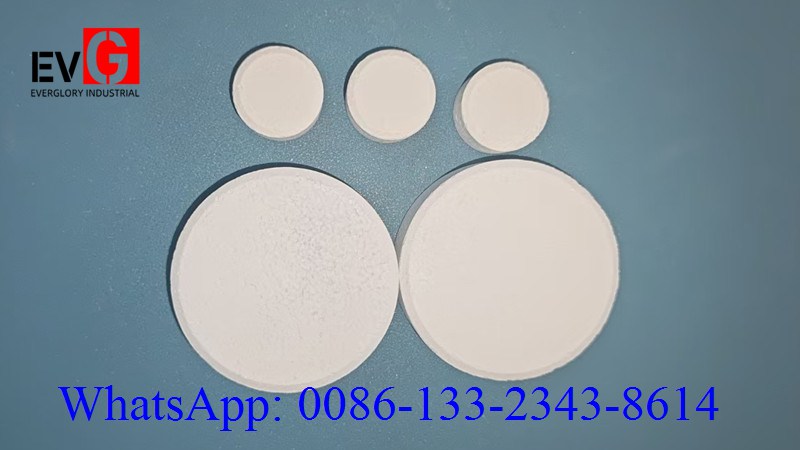
This guide covers dosage calculations, treatment methods, certifications, and safety practices for using calcium hypochlorite granular and calcium hypochlorite tablets in drinking water applications — from municipal water systems to emergency field treatment.
Why Calcium Hypochlorite for Drinking Water?
Several properties make calcium hypochlorite the standard choice for drinking water disinfection:
- No cyanuric acid residue — Unlike TCCA and SDIC, cal hypo doesn't add CYA to treated water. CYA is not approved for drinking water because it can shield bacteria from chlorine's disinfecting action.
- High available chlorine (65-75%) — Concentrated form means less storage space and lower shipping costs for bulk treatment.
- Fast dissolution and immediate action — Releases free chlorine quickly for rapid pathogen kill.
- Stable in storage — When properly stored, retains effectiveness for 6-12 months, essential for emergency preparedness.
- Easy to dose and measure — Granular and tablet forms allow precise dosing for any water volume.
- NSF/ANSI 60 certified — Meets international standards for drinking water treatment chemicals.
Dosage Guidelines for Drinking Water
Standard Municipal Treatment Dosage
For routine drinking water disinfection, the target is a free chlorine residual of 0.2-0.5 ppm at the point of delivery (the consumer's tap). The initial dose must be higher to account for chlorine demand (the amount of chlorine consumed by organic matter, iron, manganese, and other contaminants in the water).
| Water Source Quality | Initial Dose | Expected Residual (after 30 min) | Contact Time |
|---|---|---|---|
| Clear, low-turbidity water | 0.5-1.0 ppm | 0.2-0.5 ppm | 30 minutes minimum |
| Slightly cloudy water | 1.0-2.0 ppm | 0.2-0.5 ppm | 30-60 minutes |
| Cloudy/turbid water | 2.0-5.0 ppm | 0.5-1.0 ppm | 60 minutes minimum |
| Emergency treatment (unknown quality) | 5.0-10.0 ppm | 1.0-3.0 ppm | 60 minutes, then test |
How to Calculate the Dose
To calculate the amount of calcium hypochlorite (70% available chlorine) needed for a given water volume and target dose:
Calcium Hypochlorite (grams) = (Water Volume in liters × Target ppm) ÷ (700 × 0.7)
Where 700 converts ppm to mg/L and 0.7 is the available chlorine fraction (70%).
Example: To achieve 2 ppm chlorine in 10,000 liters of water:
(10,000 × 2) ÷ (700 × 0.7) = 20,000 ÷ 490 = 40.8 grams of calcium hypochlorite 70%
Preparing a Calcium Hypochlorite Stock Solution
For most drinking water applications, it's more practical to prepare a 1% chlorine stock solution first, then dose the stock solution into the water. This ensures accurate, consistent dosing.
1% Stock Solution Recipe
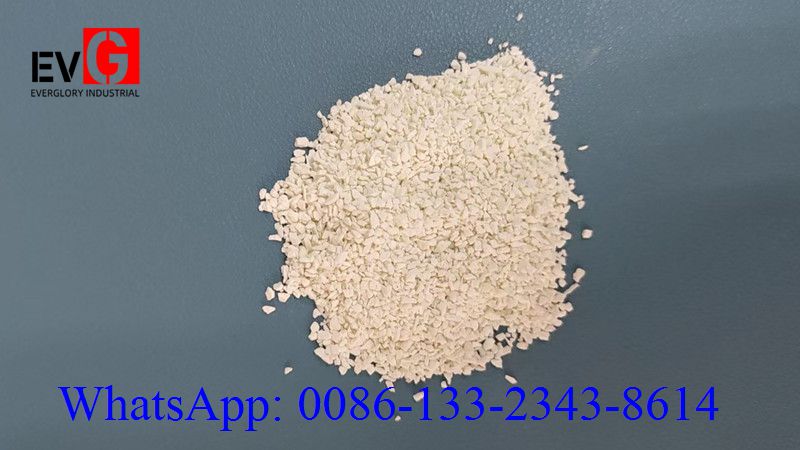
- Weigh 15 grams of calcium hypochlorite granular (70% available chlorine)
- Add to 1 liter of clean water in a plastic or glass container (never use metal)
- Stir vigorously until dissolved — some calcium residue will settle at the bottom (this is normal calcium carbonate)
- Let stand for 30 minutes, then decant or filter the clear solution
- Store in an opaque, sealed plastic container in a cool, dark place
- The 1% solution contains approximately 10,000 ppm available chlorine
- Shelf life: 1-2 weeks (prepare fresh weekly for best results)
Dosing from Stock Solution
| Water Volume | 1% Stock Solution for 1 ppm | 1% Stock Solution for 2 ppm | 1% Stock Solution for 5 ppm |
|---|---|---|---|
| 1 liter | 0.1 mL | 0.2 mL | 0.5 mL |
| 10 liters | 1 mL | 2 mL | 5 mL |
| 100 liters | 10 mL | 20 mL | 50 mL |
| 1,000 liters (1 m³) | 100 mL | 200 mL | 500 mL |
| 10,000 liters (10 m³) | 1 liter | 2 liters | 5 liters |
⚠️ Critical Safety Rules
1. Only use NSF/ANSI 60 certified calcium hypochlorite for drinking water treatment.
2. Never exceed 4 ppm free chlorine at the tap — this is the EPA maximum for potable water.
3. If water is turbid (cloudy), filter first before chlorinating — suspended particles shield pathogens from chlorine.
4. Always add chlorine to water, never water to chlorine.
5. Test free chlorine residual after the contact time — if it reads 0, the dose was insufficient (chlorine demand exceeded the dose). Re-dose and retest.
Emergency Water Purification
In emergency situations (natural disasters, field operations, remote areas), calcium hypochlorite is one of the most reliable water purification methods. Here's the field procedure:
- Filter the water through cloth, coffee filters, or a sediment filter to remove particles.
- Prepare a 1% stock solution using the recipe above (15g cal hypo per 1 liter water).
- Add 3-5 drops of stock solution per liter of clear water (or 6-10 drops for cloudy water).
- Mix thoroughly and let stand for 30 minutes minimum.
- Smell the water — it should have a faint chlorine odor. If no odor, add half the original dose and wait another 15 minutes.
- If the chlorine taste is too strong, let the water stand uncovered for a few hours, or pour it between containers several times to aerate.
Certifications & Standards
For drinking water treatment, your calcium hypochlorite supplier must provide:
| Certification | Issuing Body | Scope |
|---|---|---|
| NSF/ANSI Standard 60 | NSF International | Drinking water treatment chemicals (US & international) |
| EN 12931 | CEN (European Committee for Standardization) | Calcium hypochlorite for swimming pool and drinking water |
| WHO Guidelines | World Health Organization | Drinking water quality (4th Edition) |
| REACH Registration | ECHA (European Chemicals Agency) | EU market access |
| ISO 9001 | ISO | Quality management system |
| SGS/BV/Intertek COA | Third-party inspection | Batch-specific quality verification |
Always request the Certificate of Analysis (COA) for each shipment and verify: available chlorine ≥65%, moisture ≤7%, heavy metals ≤10ppm, and stability test pass.
Frequently Asked Questions
Is calcium hypochlorite safe for drinking water?
Yes — calcium hypochlorite is approved by WHO, EPA, and NSF for drinking water disinfection when used at proper dosages (0.2-4.0 ppm free chlorine residual). It's one of the most widely used water treatment chemicals globally. However, you must use NSF/ANSI 60 certified product and never exceed the EPA maximum of 4 ppm free chlorine at the tap.
How much calcium hypochlorite do I add to drinking water?
For clear water, add enough to achieve 0.5-1.0 ppm initial dose (resulting in 0.2-0.5 ppm residual after 30 minutes). For 1,000 liters of clear water, use approximately 10-20 grams of calcium hypochlorite 70%. Always test the residual after the contact time and adjust. For emergency treatment, 3-5 drops of 1% stock solution per liter is the standard dose.
What is the difference between calcium hypochlorite and bleach for drinking water?
Calcium hypochlorite is a solid (65-75% available chlorine) while household bleach is a liquid solution (5-6% available chlorine). Calcium hypochlorite is more concentrated, has a longer shelf life (6-12 months vs 3-6 months for bleach), and is more cost-effective for bulk treatment. Bleach is easier to dose for small volumes but degrades faster. Both are effective for drinking water disinfection when properly dosed.
How long should I wait after adding calcium hypochlorite before drinking the water?
Wait a minimum of 30 minutes after adding calcium hypochlorite before drinking. This contact time allows the chlorine to inactivate bacteria, viruses, and other pathogens. For turbid (cloudy) water or higher doses, wait 60 minutes. After the contact time, test the free chlorine residual — it should read 0.2-0.5 ppm. If it reads 0, re-dose and wait another 30 minutes.
Does calcium hypochlorite remove heavy metals from drinking water?
No — calcium hypochlorite is a disinfectant, not a heavy metal removal agent. It kills bacteria, viruses, and some parasites, but does not remove lead, arsenic, mercury, or other heavy metals. If your water source contains heavy metals, you'll need additional treatment (coagulation/flocculation, activated carbon filtration, reverse osmosis, or ion exchange) in addition to chlorination.