Products
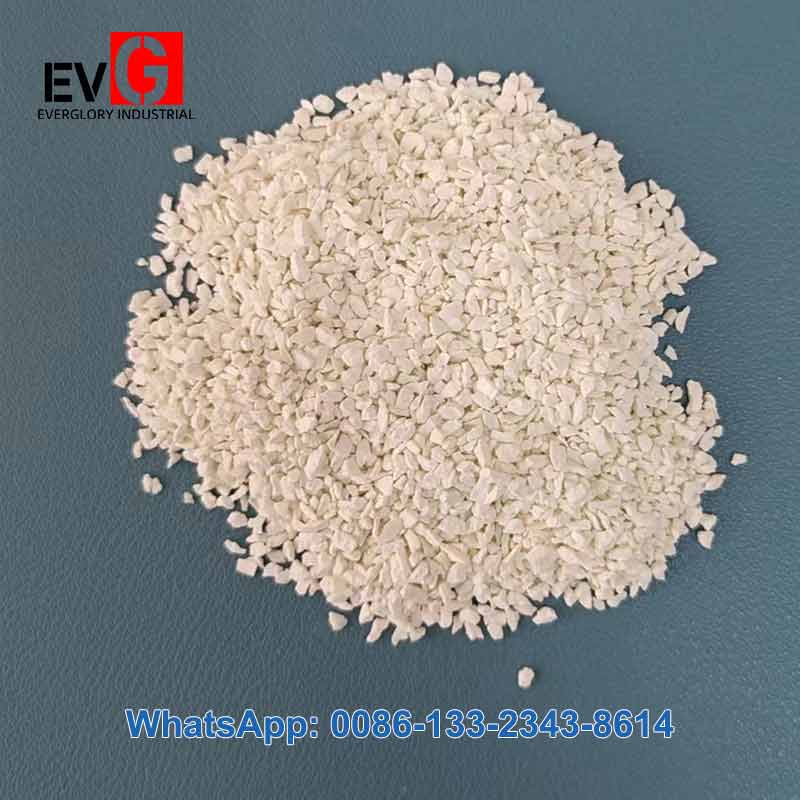
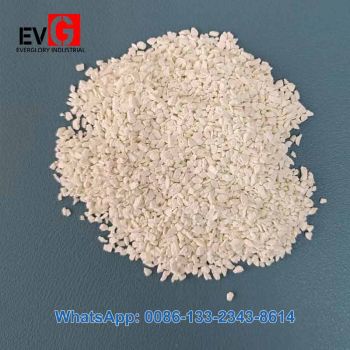
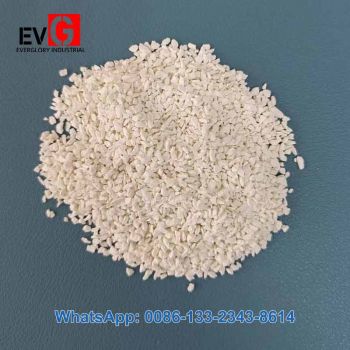
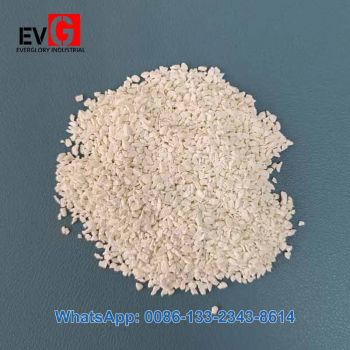
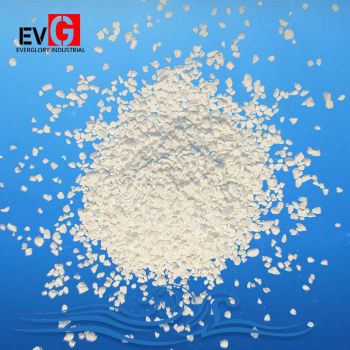
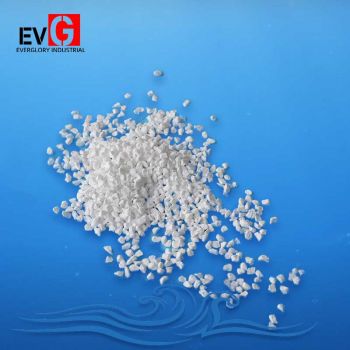
Dichlor granules are the workhorse form of stabilized chlorine for pool professionals who need chlorine in the water now, not over six hours. Broadcast across the surface, this white free-flowing granular solid dissolves within minutes, leaving no residue on vinyl liners or plaster and delivering its full dose of dichlor granular chlorine directly into the water column. The built-in cyanuric acid stabilizer protects that chlorine from ultraviolet loss through the sunniest part of the day, while the near-neutral solution pH spares equipment and finishes the corrosion that strongly alkaline or acidic chlorines cause. Everglory Industrial manufactures dichlor granules in both commercial grades — the 56% dihydrate known on the American market as dichlor 56, and the 60% anhydrous — in mesh sizes of 8-30 and 20-40, packed in UN 2465 certified plastic drums for export worldwide.
Why the Granular Form Wins on Flexibility
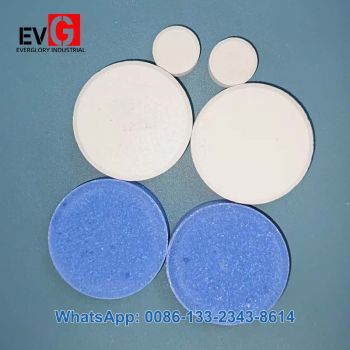
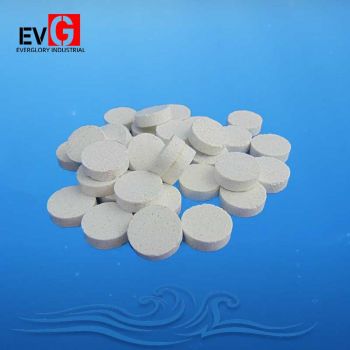
Tablet chlorine is engineered for constant, slow release; granular is engineered for control. With dichlor granules, an operator can shock a pool at closing time, spot-dose a high-bather-load commercial basin between sessions, or prepare a disinfection solution at a precise concentration — each a job slow-dissolving tablets cannot do on demand. Because the granular dissolves completely and quickly, there is no feeder to clean, no floater to retrieve, and no waiting before bathers return.
That same speed makes granular the form of choice beyond pools. Drinking water programs in hot climates prepare dosing solutions from granular for well disinfection and emergency response. Aquaculture operations disinfect ponds and hatcheries between stocking cycles. Institutional cleaning teams build surface disinfection stock solutions from fast-dissolving granular rather than waiting on slow tablets. One form, many programs — which is why distributors stock dichlor granular chlorine as their highest-turning stabilized SKU.
Dichlor 56 — The Standard Trade Grade
When American distributors and retailers list granular stabilized chlorine, the grade they list is almost always dichlor 56 — the dihydrate of sodium dichloro-s-triazinetrione (CAS 51580-86-0) with 56% minimum available chlorine. The two molecules of crystal water inside the dihydrate lattice are what make this grade the most storage-stable commercial form of the compound: sealed drums hold their declared chlorine through extended warehouse cycles and seasonal carry-over, batch after batch.
The 60% anhydrous grade (CAS 2893-78-9) carries more chlorine per shipped kilogram and rewards long-haul container freight to distributed warehouses. Both grades share the same fast dissolution, UV stabilization, and near-neutral pH. Buying guidance is straightforward: if your market specification, registration, or retail label calls for 56%, Everglory supplies the dihydrate; if landed cost per kilogram of chlorine decides the tender, the anhydrous grade usually wins the arithmetic.
Mesh Sizes and What They Control
Granular chemistry is only half the specification; particle size is the other half. Everglory produces dichlor granules in two mesh cuts, and the choice controls dissolution behavior:
Both cuts are verified by sieve analysis on every production batch, and the Certificate of Analysis that travels with each drum reports the measured distribution — so incoming inspection at your end is a formality, not a negotiation.
Dichlor Granular Chlorine vs Calcium Hypochlorite Granules
The two granular chlorines most often cross-shopped are dichlor granular chlorine and calcium hypochlorite (cal-hypo) granules. Cal-hypo carries more chlorine per kilogram (65-70%) and costs less per unit of chlorine, but it is unstabilized — sunlight strips it fast — and strongly alkaline, raising pH and scaling soft water while it disinfects. It also belongs to a higher hazard class for transport and storage. Dichlor answers both weaknesses: cyanuric protection holds the residual through sun exposure, and the near-neutral pH leaves water chemistry where the operator set it. For outdoor pools in sun-belt states, stabilized granular usually delivers the lower true cost per season, because less product is lost to photolysis.
Specifications
Packaging, Documentation, and Export Support
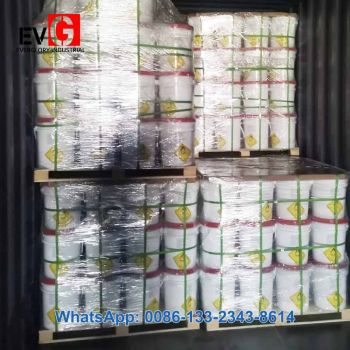
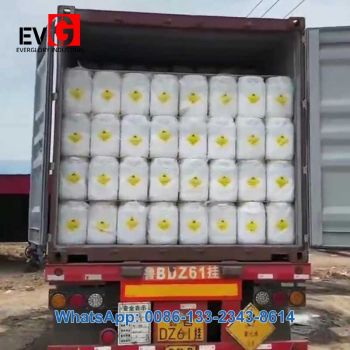
The granular product ships in UN 2465 certified plastic drums from 5 kg to 50 kg, with custom drum weights available on request for private label programs — the packaging retail buyers expect and dangerous goods regulations require. Every shipment travels with MSDS, COA, Certificate of Origin, and dangerous goods declaration prepared for the destination market. Store drums cool, dry, and sealed, strictly separate from acids, ammonia-containing products, and calcium hypochlorite; reseal after every use.
Frequently Asked Questions
Q: How fast do dichlor granules dissolve?
Dichlor granules dissolve within minutes of broadcasting — the 20-40 mesh cut fastest, the 8-30 cut slightly longer but still far quicker than trichlor. Complete dissolution means no residue on liners and no waiting feeder service; verify free chlorine before bathers return.
Q: Is dichlor 56 the right grade for my market?
If you supply the American pool trade, yes — dichlor 56 (dihydrate, CAS 51580-86-0) is the standard distribution and retail grade, and the most storage-stable form. If tenders are decided on chlorine per shipped kilogram, the 60% anhydrous grade usually wins the landed-cost arithmetic.
Q: Can I use dichlor granular chlorine to shock a pool?
Yes — shocking is the primary use. Broadcast dichlor granular chlorine across the surface with the pump running, typically to raise free chlorine about 5-10 mg/L above the baseline. Because dissolution is complete and pH impact is near-neutral, dosing control stays with the operator.
Q: Which mesh size should I order?
Order 8-30 mesh for pool broadcasting and retail jars; order 20-40 mesh when the granules feed solution preparation or sprayer programs where the finest, fastest cut pays off. Both cuts ship with sieve analysis on the COA.
Q: What is the minimum order quantity and lead time?
The standard MOQ is 1 metric ton for trial orders; regular programs are best planned around a full 20ft container. Typical production lead time is 10-15 days after order confirmation, plus ocean transit.
Q: Do you offer OEM private label for dichlor granules?
Yes. We print your company name, logo, and contact details on drum labels, with custom drum weights for private label programs. Label artwork templates are shared for your approval before production begins.
Ready to source dichlor granules direct from the manufacturer? Contact Everglory Industrial today for a free quotation with CIF pricing to your destination port. Send your required grade (56% or 60%), mesh size, drum size, and monthly volume — our export team responds within 24 hours in English, French, and Spanish.