Products
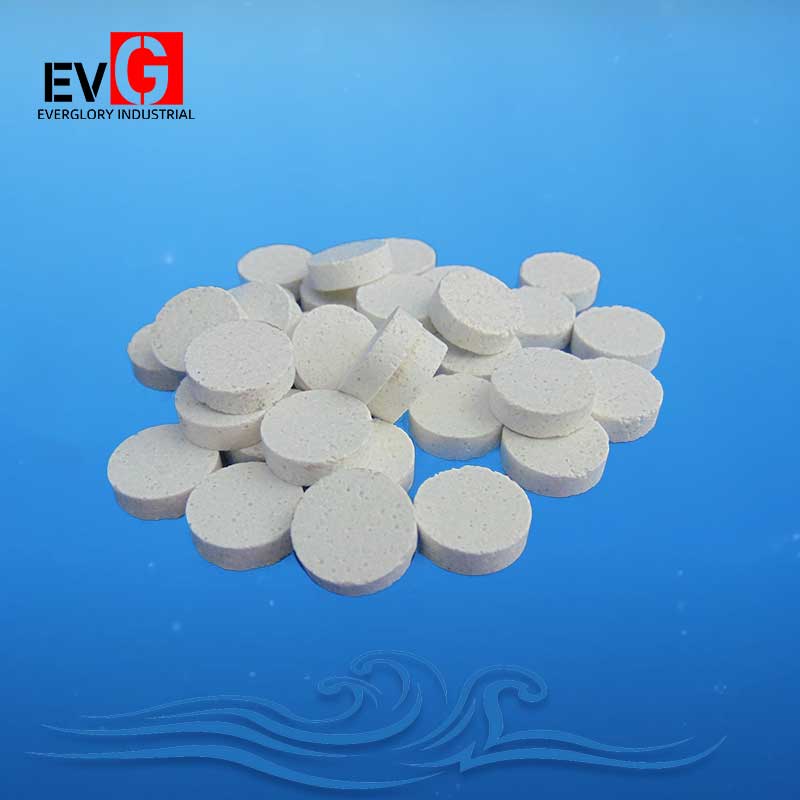
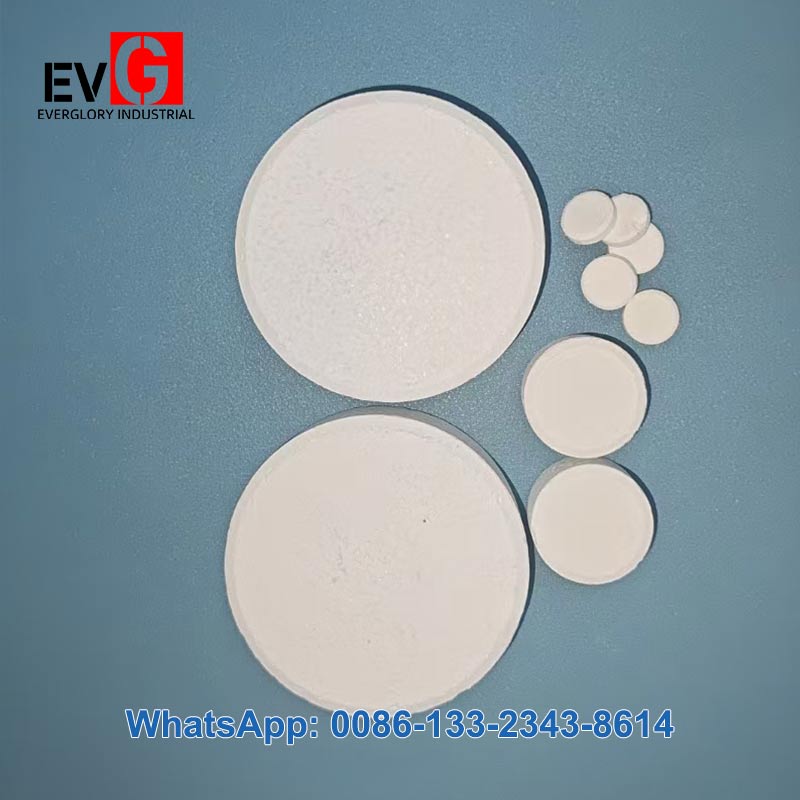
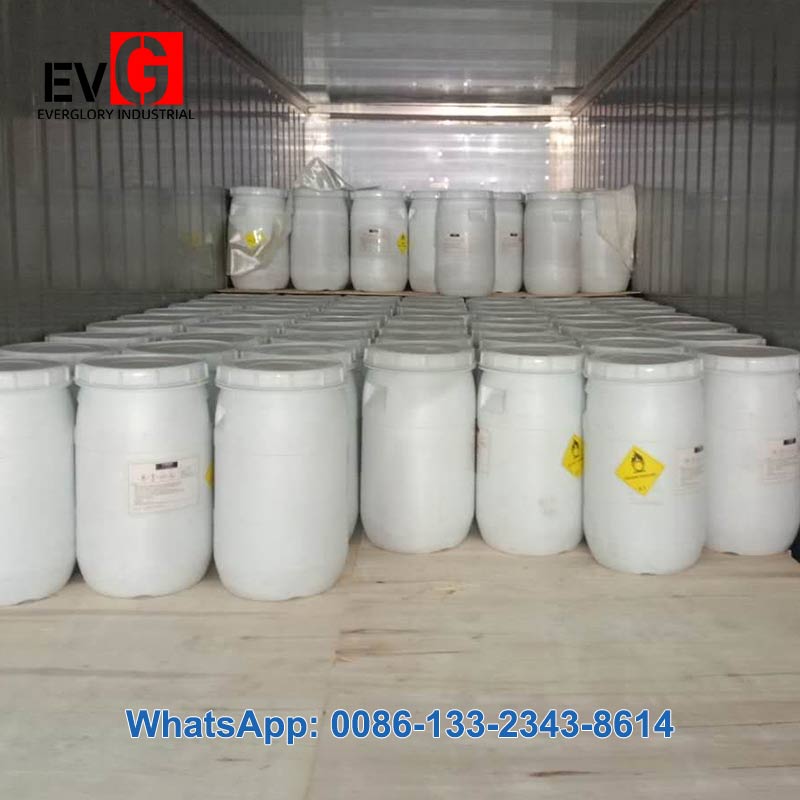
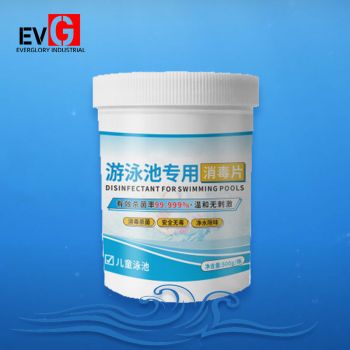
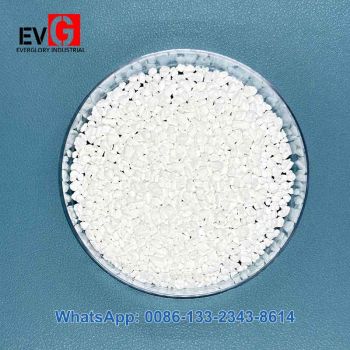
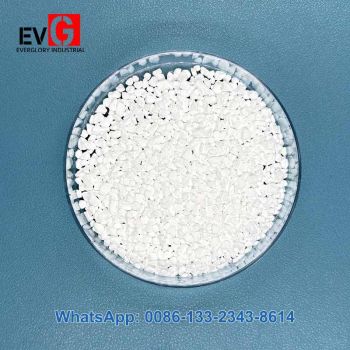
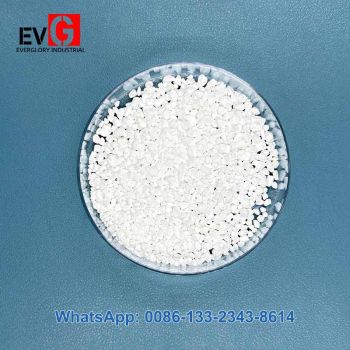
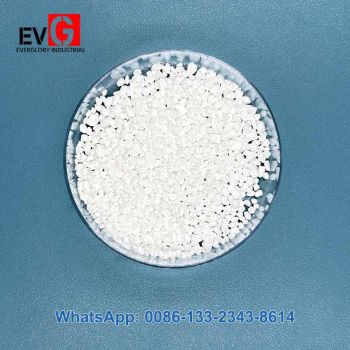
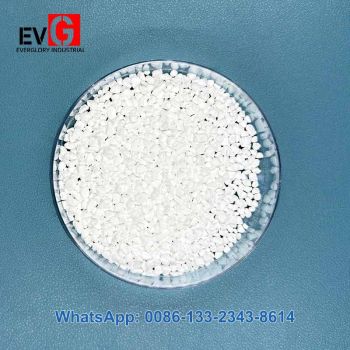
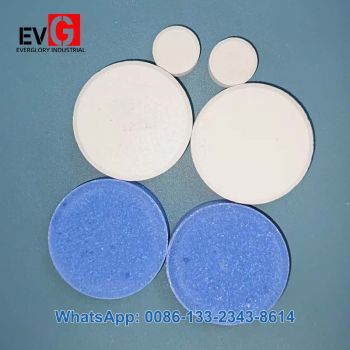
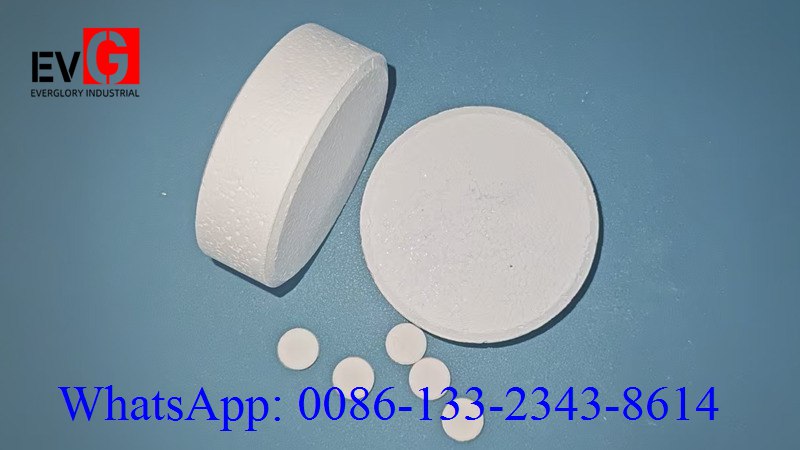
Selecting the right chlorine tablets for pool programs is a procurement decision that affects water quality compliance, service labor costs, and customer retention for years. Pool service companies, chemical distributors, and facility managers must evaluate chlorine grade, tablet geometry, dissolution behavior, and dangerous goods logistics before committing to a supplier. This guide from Everglory Industrial covers the full decision chain: how to specify chlorine tablets for pool maintenance, what technical data to verify, how to structure a maintenance calendar around tablet dosing, and how to resolve the water problems your customers will actually report. We manufacture 3-inch (200g) slow-dissolving and 1-inch (20g) rapid-dissolving calcium hypochlorite tablets with 65-70% available chlorine, shipped in UN 2880 certified plastic drums to buyers in more than 60 countries, with sales support in English, French, and Spanish.
How to Choose Chlorine Tablets for Pool Maintenance
Five technical factors separate reliable chlorine tablets for pool programs from problem-prone ones. Build each factor into your purchase specification:
- Chlorine grade — 65% vs 70%: The 70% grade delivers roughly 7% more active chlorine per tablet, which can reduce the tablet count per pool and cut drum consumption on large routes. The 65% grade is more economical up front and dissolves slightly more gently. Match the grade to your dosing math and landed cost per kilogram of available chlorine.
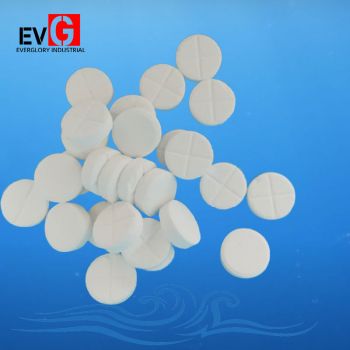
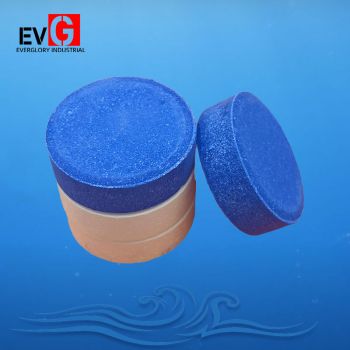
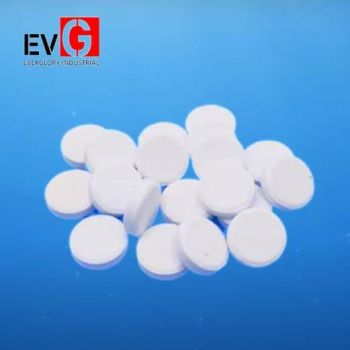
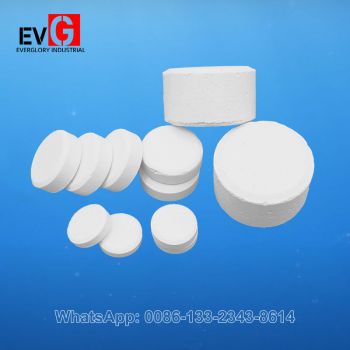
- Tablet size selection: 3-inch (200g) tablets suit pools of 25,000 L and above, skimmers, and erosion feeders. 1-inch (20g) tablets suit small pools, spas, and feeder systems with narrow cartridges. Offering both sizes lets one supplier cover an entire service portfolio.
- Dissolution rate: Consistency matters more than speed. Ask the manufacturer for documented dissolution testing per batch — tablets that crumble early dump chlorine in a spike, while overly hard tablets under-dose between visits. Everglory tests hardness, friability, and dissolution on every batch.
- Binder-free quality: Tablets pressed with chemical binders dissolve unevenly and add non-active material to the water. Specify mechanically pressed, binder-free calcium hypochlorite tablets with 100% active content for predictable dosing and cleaner water chemistry.
- Certifications: Require ISO 9001 manufacturing, UN 2880 certified drum packaging, a COA per batch, and an MSDS in your working language. These documents are also what your own customers and customs authorities will ask to see.
Chlorine Tablets for Pool: Product Specifications
Pool Maintenance Schedule with Chlorine Tablets
A structured schedule turns chlorine tablets for pool maintenance from guesswork into a repeatable service standard. The framework below fits residential and light-commercial accounts:
Chlorine Tablets for Pool: Application Methods Compared
Common Pool Water Problems and Solutions
- Low chlorine residual: Caused by heavy bather load, high UV exposure, or exhausted tablets in the dispenser. Solution: refill the dispenser with fresh tablets, verify pump run times, and apply a granular shock to restore the residual quickly, then resume tablet maintenance dosing.
- Algae growth: Green tint or slippery walls indicate chlorine has fallen below the algicidal threshold, often with poor circulation or phosphates present. Solution: shock with granular calcium hypochlorite, brush the surfaces, clean the filter, and increase tablet count or dispenser vent opening until residuals hold at 2-3 mg/L.
- Cloudy water: Usually fine suspended particles from early algae, inadequate filtration, or low chlorine. Solution: verify filter operation and run time, shock the pool, and maintain consistent tablet dosing; a clarifier can speed particle removal.
- pH imbalance: Calcium hypochlorite is alkaline, so tablet dosing gradually pushes pH upward. Solution: test pH weekly and correct toward 7.2-7.6 with pH reducer; keep total alkalinity in the 80-120 mg/L range so pH moves slowly and predictably.
- High combined chlorine: Chlorine odor and eye irritation come from chloramines, not free chlorine. Solution: shock the pool to breakpoint to oxidize combined chlorine back to free chlorine, then let the tablet program maintain a steady residual to prevent re-accumulation.
Packaging and Storage
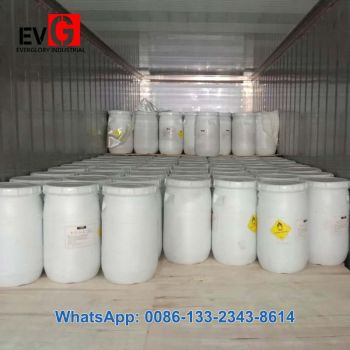
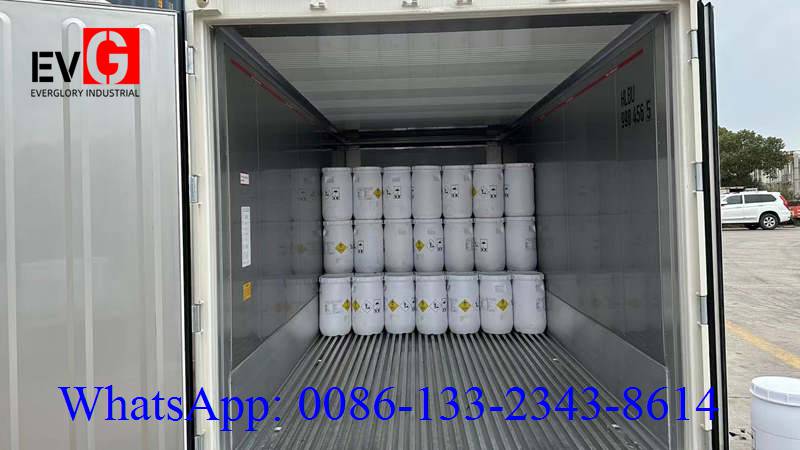
Everglory Industrial ships chlorine tablets for pool programs exclusively in UN 2880 certified plastic drums with inner PE liners, fully compliant with IMDG dangerous goods rules for ocean freight:
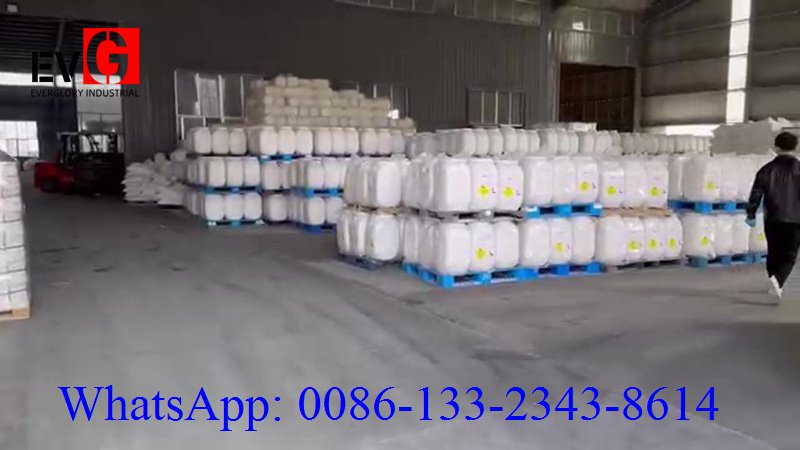
Warehouse the drums cool, dry, and ventilated, separated from acids, ammonia, and organic materials, and stacked no more than three high. Reseal drums immediately after withdrawal; humid air softens tablets and degrades available chlorine. Under correct conditions the product keeps full strength for 24 months from production.
Frequently Asked Questions
Q: How many chlorine tablets does a 50,000 L pool need?
A 50,000 L pool typically needs 1-2 three-inch (200g) tablets placed every 3-4 days, or one tablet in a feeder topped up weekly. Confirm with a test kit and hold free chlorine between 1-3 mg/L; heavy bather load or high water temperature will consume chlorine faster and require more frequent top-ups.
Q: Can I use chlorine tablets in a saltwater pool?
Yes, as a supplement. Saltwater systems generate chlorine via the salt cell, but the generator cannot always keep up after storms, heavy use, or cell cleaning. Calcium hypochlorite tablets bridge the gap without adding cyanuric acid, unlike trichlor, which would steadily push CYA toward chlorine lock.
Q: What is the ideal free chlorine level for a maintained pool?
Maintain 1-3 mg/L free chlorine, with pH held at 7.2-7.6 so the chlorine stays in its active form. Commercial and public pools often face stricter local minimums; tablet dosing through a feeder is the most reliable way to hold residuals inside a narrow band around the clock.
Q: How do I transition a pool from granular chlorine to tablets?
First balance pH and alkalinity, then shock once with granular product to establish a clean residual. Next, place 3-inch tablets in the skimmer or feeder based on pool volume, and test daily for the first week. Adjust the tablet count until free chlorine holds steady between visits, then keep granular chlorine on the truck for bi-weekly shock treatments only.
Q: Do you offer OEM labeling on the drums?
Yes. We print your brand name, logo, hazard pictograms, and contact details on the drum labels, and can produce custom drum weights for retail-facing programs. OEM private label orders start at 5 tons. Our design team prepares label proofs in English, French, or Spanish for your approval before printing.
Q: How many drums fit in one shipping container?
A 20ft dangerous goods container carries approximately 20-27 metric tons of tablet drums depending on the drum sizes you select; smaller drums maximize weight utilization less efficiently than 45-50 kg drums. We will model your preferred drum mix and confirm the exact load plan, pallet configuration, and freight cost in the quotation.
Need a dependable supplier of chlorine tablets for pool maintenance? Everglory Industrial ships ISO 9001 certified, binder-free calcium hypochlorite tablets in UN 2880 drums to 60+ countries. Send your tablet sizes, grades, and annual volume — our team replies within 24 hours in English, French, or Spanish with CIF pricing and a loading plan.