Products
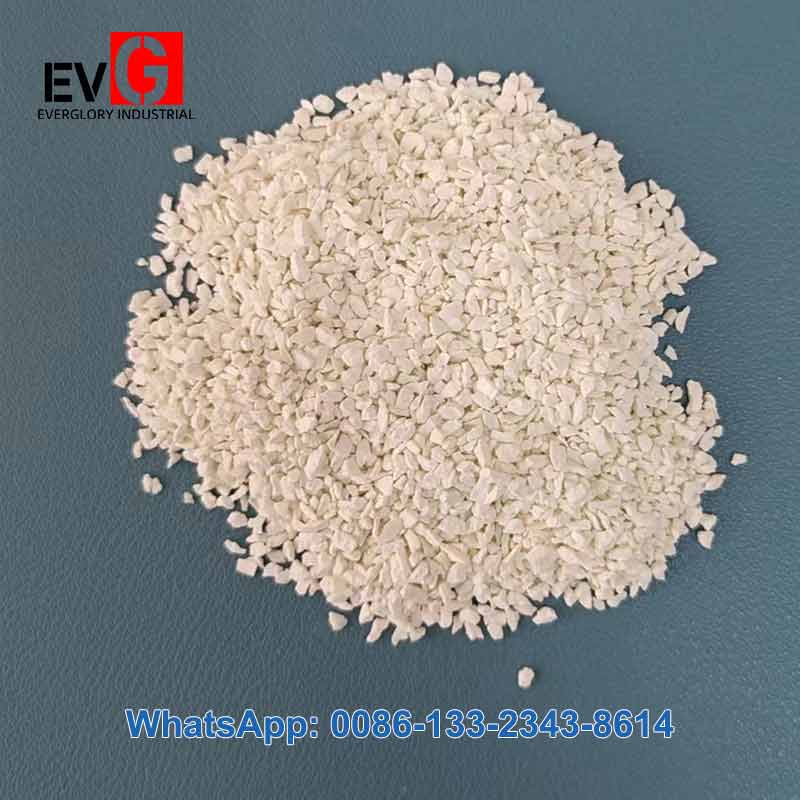
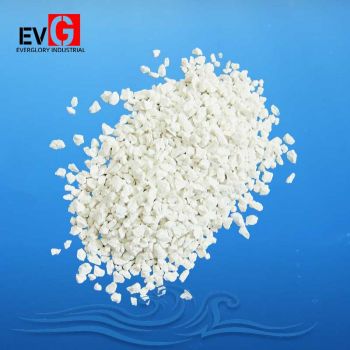
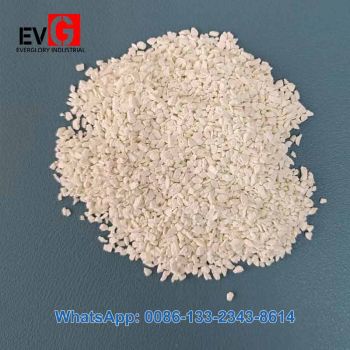
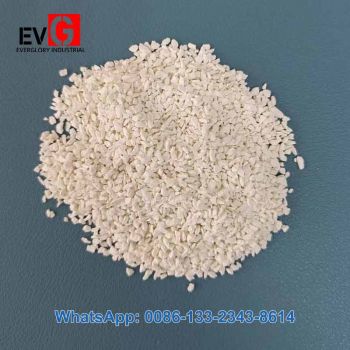
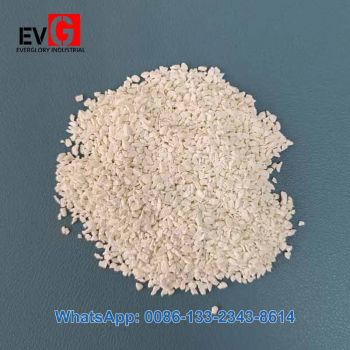
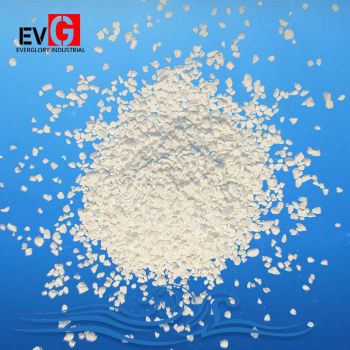
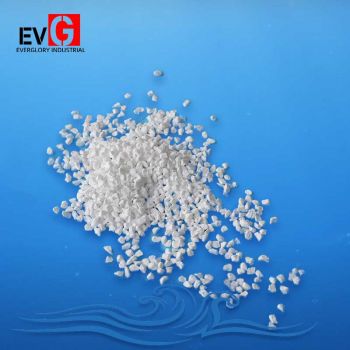
Sodium dichloroisocyanurate granules are the workhorse form of stabilized chlorine for water treatment programs that need chlorine strength on demand. Whether a specification sheet calls them SDIC granular, NaDCC granules, or uses the singular phrasing granule sodium dichloroisocyanurate, buyers are describing the same product: a white, free-flowing granular solid that dissolves quickly, releases hypochlorous acid on contact with water, and carries built-in cyanuric acid protection against sunlight. Everglory Industrial manufactures SDIC granules in two grades — anhydrous 60% minimum available chlorine and dihydrate 56% — in 8-30 mesh and 20-40 mesh sizes, packed in UN 2465 certified plastic drums from 5 kg to 50 kg and exported worldwide with full documentation.
What Are Sodium Dichloroisocyanurate Granules?
Sodium dichloroisocyanurate — SDIC, also known as NaDCC or troclosene sodium — is a chlorinated isocyanurate: a chlorine disinfectant chemically bonded to the cyanuric acid ring. In granular form the compound presents as a white, free-flowing granular solid with a faint chlorine odor. The anhydrous grade (CAS 2893-78-9) delivers 60% minimum available chlorine; the dihydrate grade (CAS 51580-86-0) delivers 56%, with two molecules of crystal water diluting the concentration in exchange for the best storage stability in the SDIC family.
The granule is the most flexible commercial form of the compound. Unlike tablets, which release chlorine on a fixed slow schedule, granules can be dosed by weight in any quantity — a handful for a small tank, a measured scoop for a swimming pool, or bulk addition for a reservoir. That is why sodium dichloroisocyanurate granules are the default specification wherever operators need adjustable, fast-acting chlorine.
Mesh Sizes: Choosing Between 8-30 and 20-40
Everglory produces SDIC granular in two mesh specifications. The choice controls dissolution speed and dust behavior, so it is worth matching the mesh to the application rather than defaulting to whichever is in stock:
Both meshes are quality-controlled by sieve analysis before release, and each Certificate of Analysis reports the mesh result alongside available chlorine, moisture, and pH values.
Dissolution and Dosing Behavior
SDIC granules dissolve rapidly and completely, leaving no insoluble residue — an advantage over calcium hypochlorite, which can leave calcium sludge in hard water. A 1% solution registers a near-neutral pH of 5.5-7.0, so dosing does not swing water chemistry the way highly alkaline chlorines do. In practice this means operators can correct chlorine levels quickly, prepare disinfection solutions in minutes, and trust that the stabilized chlorine will keep working through hours of sunlight rather than photolyzing away.
Where SDIC Granular Excels
- Swimming pools and water parks: daily dosing and shock corrections with granules that hold free chlorine through full sun days
- Drinking water treatment: village networks, wells, and emergency programs dosing by weight for residuals that survive long distribution runs
- Aquaculture: as an SDIC aquaculture disinfectant for pond and hatchery disinfection between stocking cycles, with dechlorination before reintroducing stock
- Institutional and industrial hygiene: surface disinfection and CIP support in food plants, hospitals, and livestock facilities
- Effluent treatment: controlled oxidation of municipal and industrial wastewater before discharge
Specifications
SDIC Granules or SDIC Tablets?
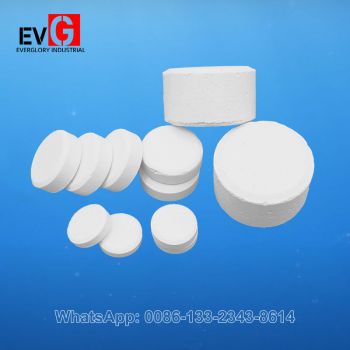
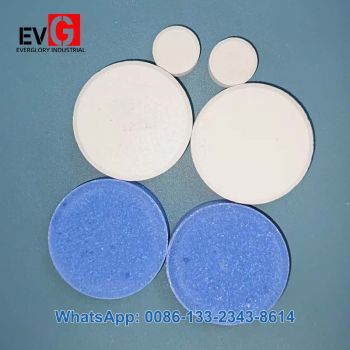
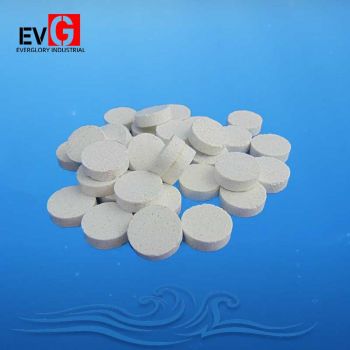
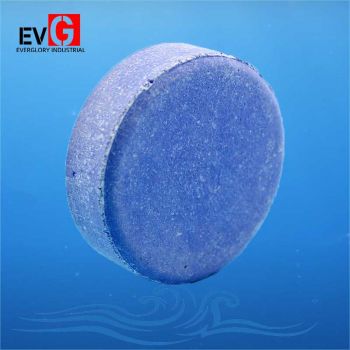
Choose granules when dosing flexibility matters — daily adjustments, varied tank sizes, solution preparation. Choose tablets when chlorine must be released slowly and unattended, as in pool feeders or cisterns. Many buyers consolidate both forms with a single supplier: granules for correction and dosing, 20 g or 3.3 g tablets for continuous release. Everglory supplies both forms of the same stabilized chemistry, so the two programs never conflict in storage or documentation.
Why Source SDIC Granules from Everglory Industrial
- Factory-direct manufacturing: granules are produced, sieved, and packed under one ISO 9001 quality system, without trading-company margins
- Both grades, both meshes: 56% and 60% in 8-30 and 20-40 mesh, so one supplier covers every market specification
- Verified batch quality: iodometric titration for available chlorine, sieve analysis for mesh, and moisture control on every batch COA
- UN-certified packaging: 5 kg to 50 kg UN 2465 plastic drums with inner liners, plus custom drum weights on request
- Complete export files: MSDS, COA, Certificate of Origin, and dangerous goods documentation prepared for your destination
Packaging and Storage
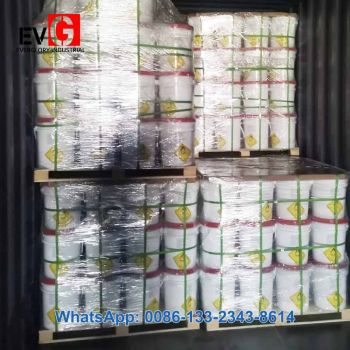
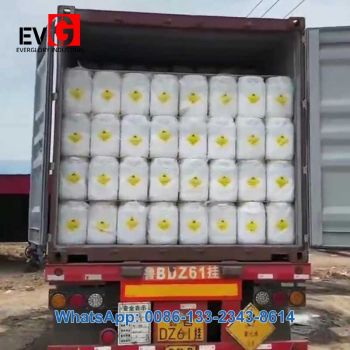
SDIC granules ship in UN 2465 certified plastic drums from 5 kg to 50 kg; custom drum weights are available for private label programs. Store drums sealed, cool, and dry, away from sunlight, heat, acids, ammonia-containing products, and calcium hypochlorite, resealing after each use. Properly stored, the granules keep full strength for 24 months from production.
Frequently Asked Questions
Q: What are sodium dichloroisocyanurate granules used for?
They are used wherever fast, adjustable stabilized chlorine dosing is needed: swimming pools, drinking water networks, aquaculture ponds, institutional surface disinfection, and effluent treatment. The granules dissolve rapidly and their built-in cyanuric acid stabilizer protects the chlorine from UV degradation.
Q: What is the difference between granule sodium dichloroisocyanurate and the granules product?
None — they describe the same material. Some specifications and regional tenders phrase the requirement in the singular ("granule"), others in the plural ("granules"). Both refer to the free-flowing granular form of SDIC, supplied here in 8-30 mesh and 20-40 mesh.
Q: Which mesh size should I order?
Order 8-30 mesh for bulk water treatment, pool dosing, and pond disinfection; order 20-40 mesh when you need the fastest dissolution, such as preparing stock solutions or surface disinfection batches. Tell us the application and our sales engineers confirm the fit before you order.
Q: Should I choose the 56% or the 60% grade?
The 60% anhydrous grade carries more chlorine per shipped kilogram, suiting long-haul container freight; the 56% dihydrate is the reference grade on many regional tenders and offers the best storage stability. We compare both against your destination and registration requirements before you commit.
Q: How are the granules packaged for export?
In UN 2465 certified plastic drums from 5 kg to 50 kg with inner liners; custom drum weights are available on request. Every shipment travels with MSDS, COA, Certificate of Origin, and dangerous goods documentation.
Q: What is the minimum order quantity?
The standard trial MOQ is 1 metric ton; ongoing programs are planned around full 20ft containers. Production lead time is typically 10-15 days after order confirmation, plus ocean transit.
Ready to source sodium dichloroisocyanurate granules direct from the factory? Contact Everglory Industrial for a CIF quotation to your destination port. Send your required grade (56% or 60%), mesh size (8-30 or 20-40), drum size, and monthly volume — our export team responds within 24 hours in English, French, and Spanish.