Products
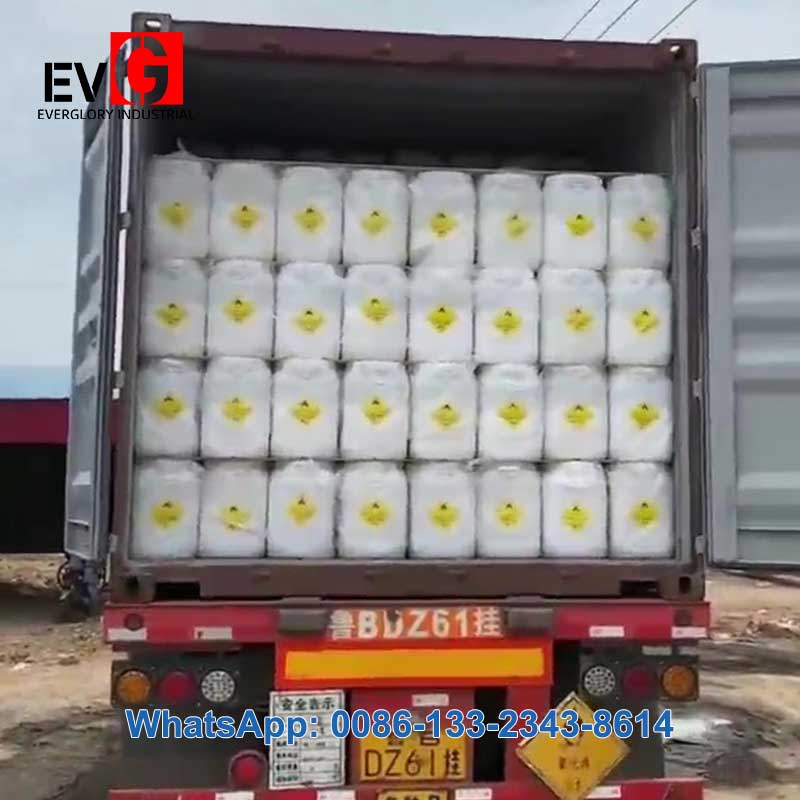
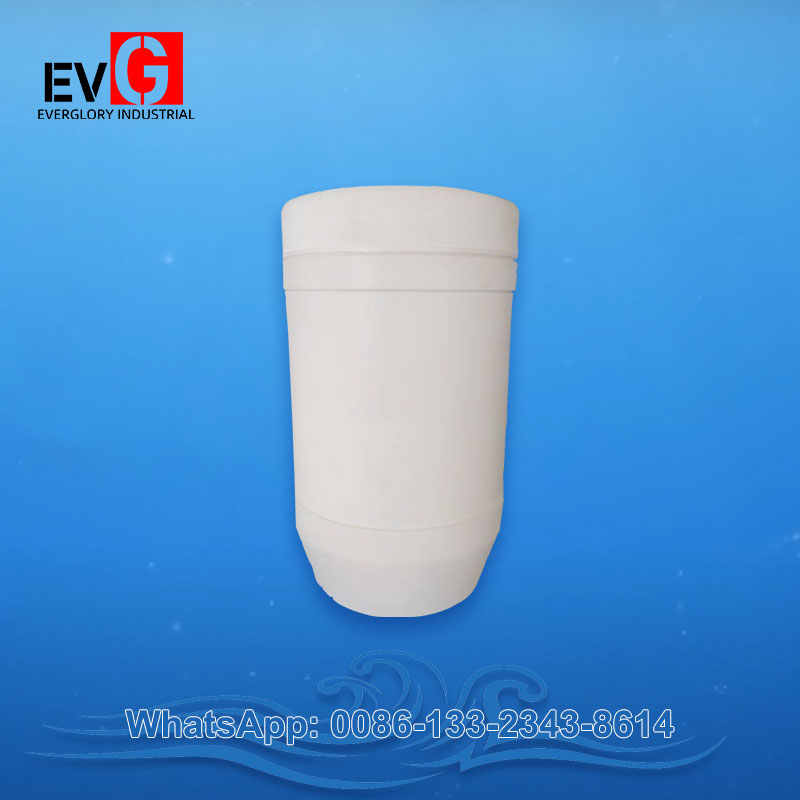
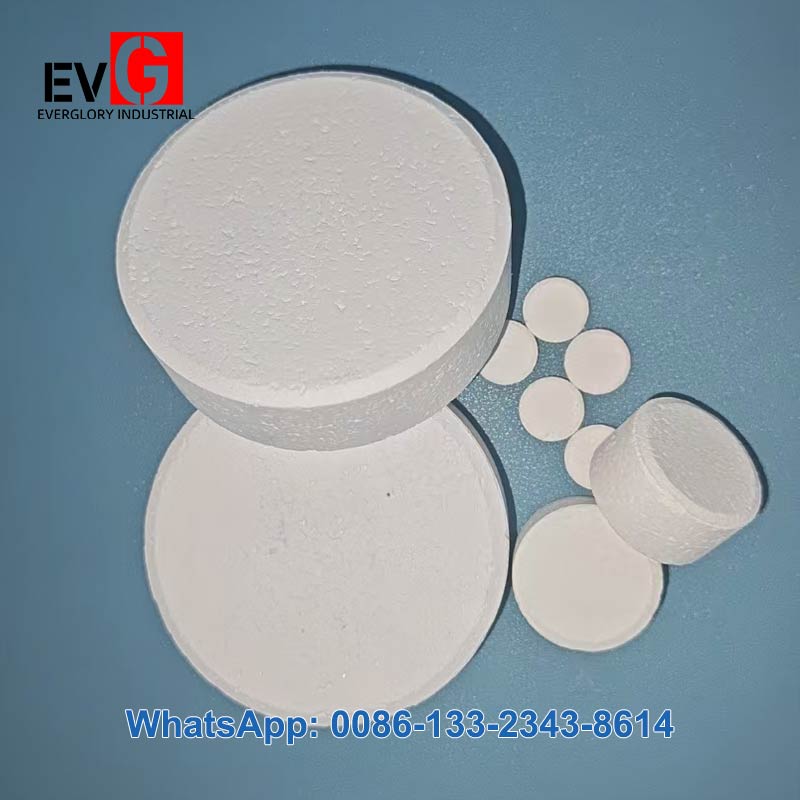
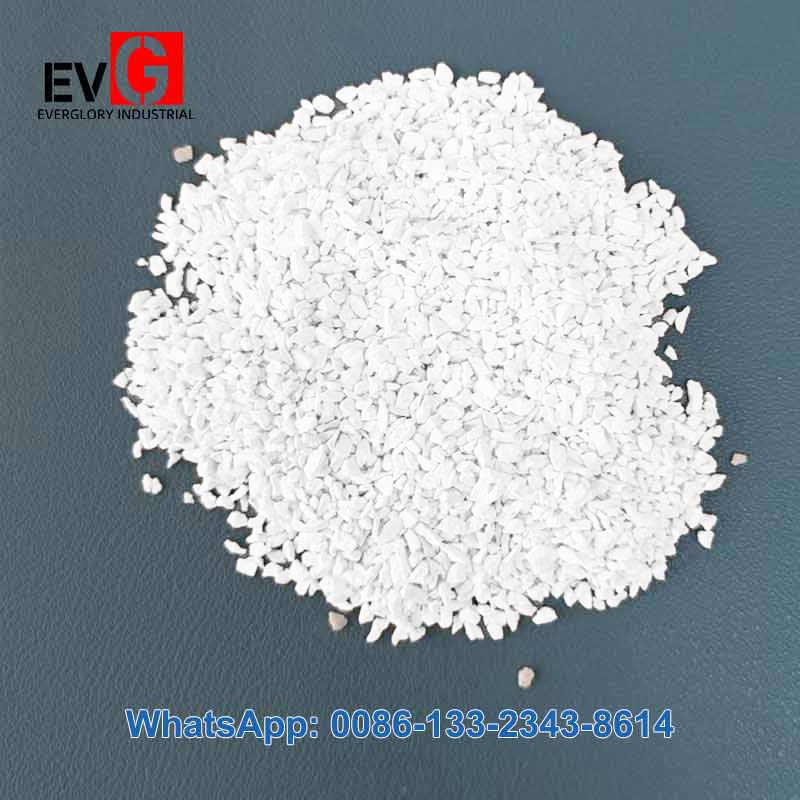
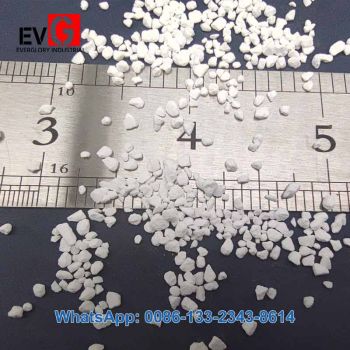
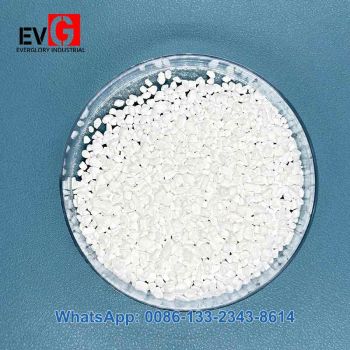
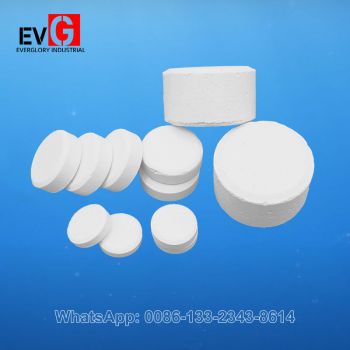
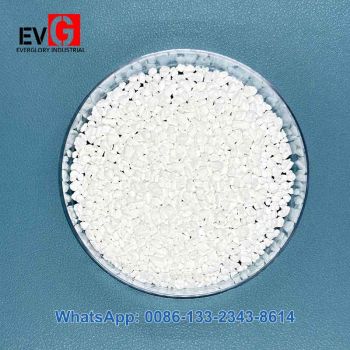
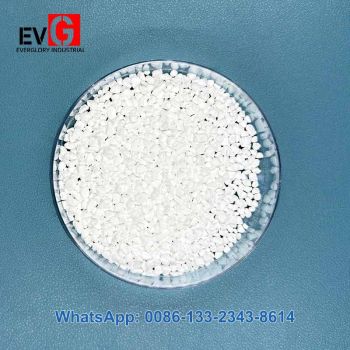
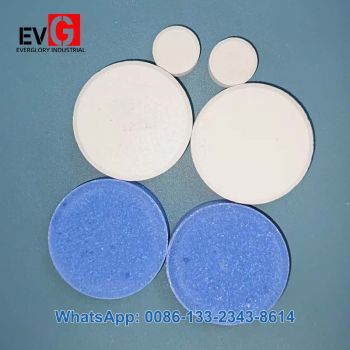
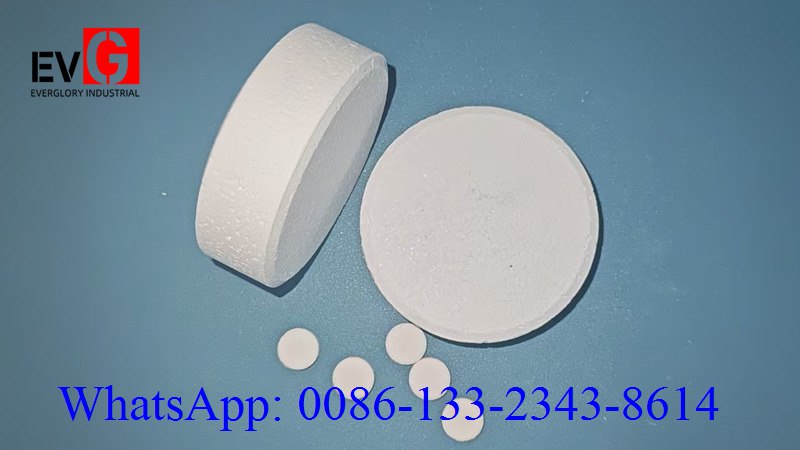
SDIC 60 is the highest available chlorine grade of sodium dichloroisocyanurate on the market, supplying a minimum of 60% available chlorine in its anhydrous form (CAS 2893-78-9). Professional buyers specify SDIC 60 when chlorine delivery per shipped kilogram matters — long-haul container freight, municipal disinfection budgets, and humanitarian procurement all reward the extra strength this grade delivers. The product dissolves quickly in water, carries built-in cyanuric acid stabilization that protects chlorine from rapid UV degradation, and sits at a near-neutral pH of 5.5-7.0 in a 1% solution, which simplifies pH correction after dosing. Everglory Industrial manufactures and exports SDIC 60 as SDIC 60% granular — including the NaDCC 60% 8-30 mesh trade-standard specification alongside 20-40 mesh — and tablets to ISO 9001 standards, shipping in UN 2465 certified plastic drums to buyers worldwide.
SDIC 60 Grade Specifications
Every production batch of SDIC 60 is tested against the specification below before release, and a Certificate of Analysis accompanies each shipment:
SDIC 60 vs SDIC 56: Which Grade to Choose
Sodium dichloroisocyanurate is sold commercially in two grades: SDIC 60, the anhydrous form (CAS 2893-78-9), and SDIC 56, the dihydrate form (CAS 51580-86-0). The chemical difference is crystal water — the dihydrate carries two water molecules per unit, which dilutes its available chlorine to 56%. The table below summarizes the practical consequences for buyers:
The guidance is straightforward: when freight distance is long, when tenders specify minimum available chlorine of 60%, or when program budgets are calculated per unit of chlorine delivered, SDIC 60 is the correct specification. Buyers serving price-sensitive local pool retail may find SDIC 56 adequate for shorter supply chains.
Why Specify SDIC 60
- Most chlorine per kilogram of any SDIC grade: at 60% minimum available chlorine, the anhydrous form delivers the strongest chlorine payload sodium dichloroisocyanurate can offer — no higher commercial grade exists
- Lower shipping cost per unit chlorine: roughly 7% more active chlorine in every container compared with the dihydrate grade directly reduces landed cost per kilogram of chlorine at destination
- Fast dissolution retained: NaDCC 60% 8-30 mesh granular SDIC 60 dissolves rapidly in water, making it suitable for both direct dosing and solution preparation without lengthy mixing times
- Near-neutral solution pH: the 5.5-7.0 range of a 1% solution minimizes pH drift in treated water, reducing corrective chemical consumption in pools and distribution networks
- Consistent anhydrous quality: produced under ISO 9001 control, every batch meets the same 60% minimum specification, giving procurement teams a stable basis for tender compliance
SDIC 60 Dosing Guidelines
The following table provides general dosing reference points for SDIC 60 across common applications. Always verify residual chlorine with a test kit and adjust to local regulatory requirements:
Applications of SDIC 60
- Municipal drinking water programs: utilities and water boards specify SDIC 60 for its high chlorine payload and stabilized release profile, which maintains residuals across long distribution networks
- Pool and spa chains: multi-site operators standardize on one high-strength grade for granular dosing and tablet feeders, simplifying inventory and training across every facility
- Humanitarian water treatment (NGOs): relief organizations value the compact strength of SDIC 60 — more treated water per drum flown or trucked into crisis zones, with cyanurate stabilization suited to open storage conditions
- Hospital and public facility disinfection: fast-dissolving granular is prepared into solution for surface and equipment sanitation where near-neutral pH protects fixtures and flooring
- Aquaculture: fish and shrimp operations use measured doses for pond and hatchery water hygiene, dechlorinating before introducing stock
Procurement Checklist for SDIC 60
Before confirming any SDIC 60 order, professional buyers should verify the following six points with their supplier:
- Request a batch COA: confirm available chlorine at 60% minimum and moisture at 4% maximum with a dated Certificate of Analysis for the exact production batch being shipped
- Verify anhydrous versus dihydrate: confirm CAS 2893-78-9 and the anhydrous form in writing — the dihydrate grade cannot meet the 60% specification
- Confirm the available chlorine titration method: agree with your laboratory on the test method (typically iodometric titration) so incoming inspection results match the supplier COA
- Check UN drum certification: verify UN 2465 certification marks on the plastic drums and compatibility with IMDG maritime transport requirements
- Review export documentation: confirm the supplier provides MSDS, COA, Certificate of Origin, commercial invoice, packing list, and dangerous goods declaration for your destination
- Arrange third-party inspection: for large contracts, appoint SGS, Bureau Veritas, or similar to witness sampling and testing before vessel loading
Packaging and Storage
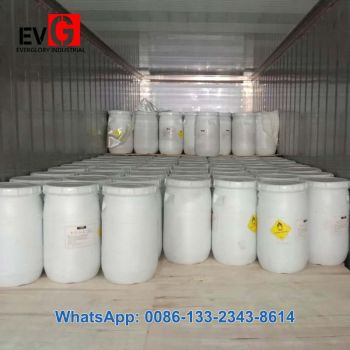
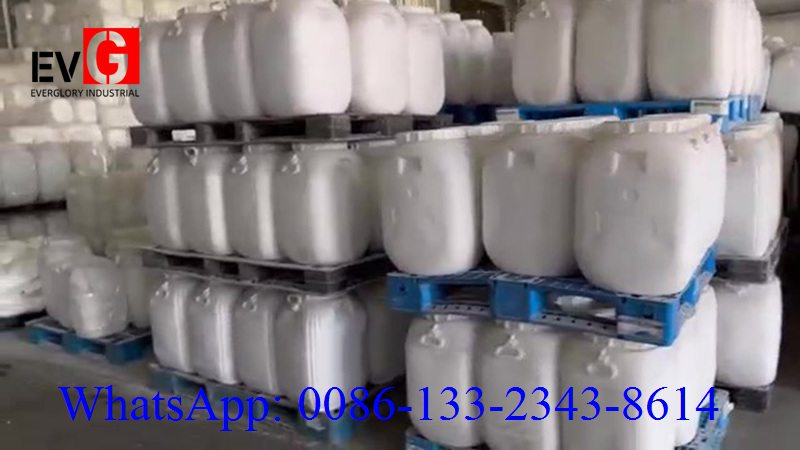
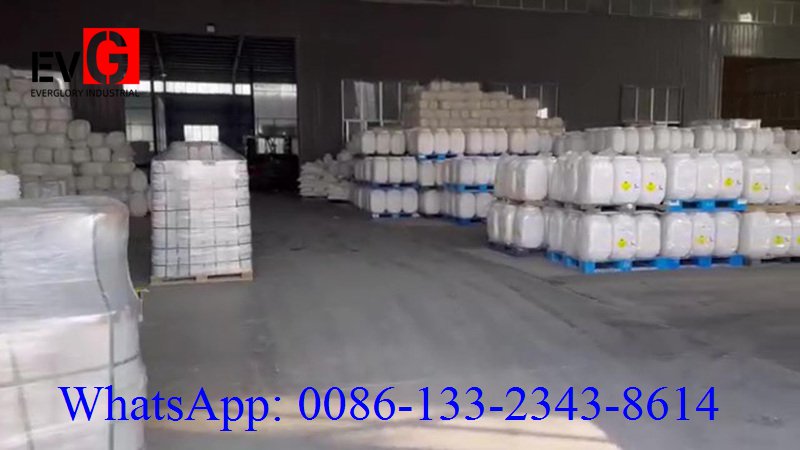
All SDIC 60 shipments from Everglory Industrial are packed in UN 2465 certified plastic drums with inner liners, compliant with IMDG code requirements for maritime transport:
Store SDIC 60 in the original sealed drum in a cool, dry, well-ventilated area away from direct sunlight and heat. Keep strictly separate from acids, ammonia-containing products, and calcium hypochlorite — contact between these materials can trigger dangerous reactions. Reseal drums tightly after each use. Under proper storage, shelf life is 24 months from production date.
Frequently Asked Questions
Q: What does SDIC 60 mean?
SDIC 60 means sodium dichloroisocyanurate with a minimum of 60% available chlorine — the anhydrous form of the compound (CAS 2893-78-9). It is the highest strength SDIC grade commercially available and contains built-in cyanuric acid stabilization that protects the chlorine from UV degradation in outdoor water.
Q: Should I choose SDIC 60 or SDIC 56?
Choose SDIC 60 when tenders specify 60% minimum available chlorine, when freight distance is long, or when your cost accounting is per unit of chlorine delivered — the anhydrous grade carries about 7% more active chlorine per container. SDIC 56, the dihydrate form, mainly serves shorter regional supply chains. Our sales team can compare both grades against your destination and volume.
Q: Is SDIC 60 safe for drinking water dosing?
Yes. SDIC 60 is widely used in municipal and emergency drinking water treatment. Typical dosing of 3-5 mg/L targets a residual of 0.3-0.5 mg/L free chlorine after a minimum 30-minute contact time. Always follow your national drinking water regulations and verify residual chlorine before distribution.
Q: What is the minimum order quantity for SDIC 60?
The standard MOQ for SDIC 60 is 1 metric ton for trial orders. For regular supply we recommend a full 20ft container for the best landed cost. Contact us with your required form (granular or tablets), mesh or tablet size, and destination port for a tailored quotation.
Q: What is the lead time for SDIC 60 export orders?
Typical production lead time is 10-15 days after order confirmation for routine volumes of SDIC 60, plus ocean transit to your destination port. Peak-season orders and OEM labeling may require additional days. We confirm a firm schedule in the proforma invoice for every order.
Q: Do you offer OEM private label for SDIC 60?
Yes. We print your company name, logo, and contact details on drum labels for SDIC 60 orders, with custom drum weights available for private label programs. OEM orders typically require a minimum of 5 tons. Our team will share label artwork templates for your approval before production.
Ready to source SDIC 60? Contact Everglory Industrial today for a free quotation with CIF pricing to your destination port. Send your required form (granular or tablets), mesh size, drum size, and monthly volume — our export team responds within 24 hours and communicates fluently in English, French, and Spanish.