Products
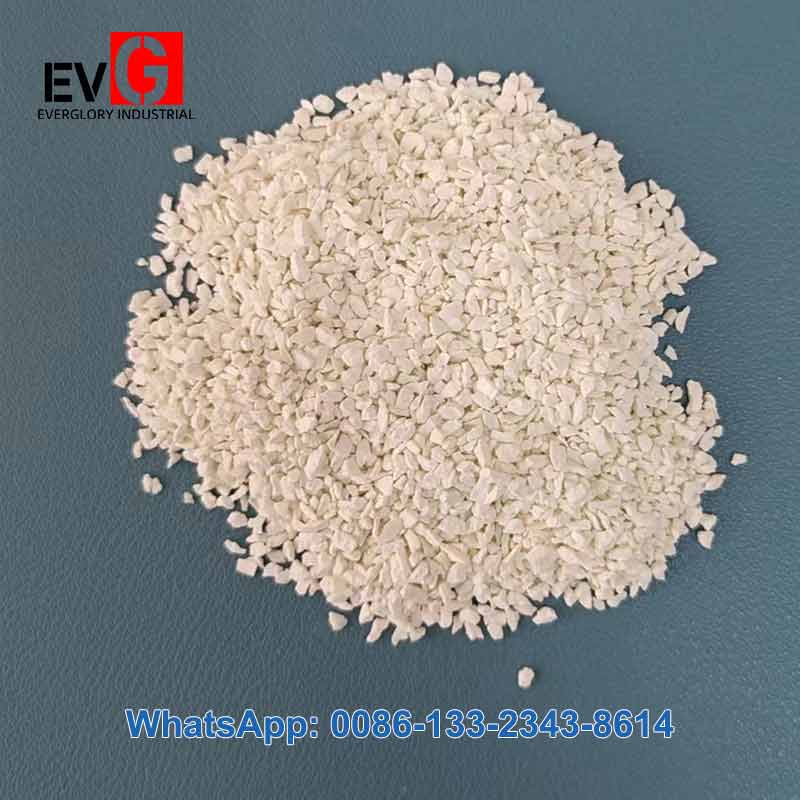
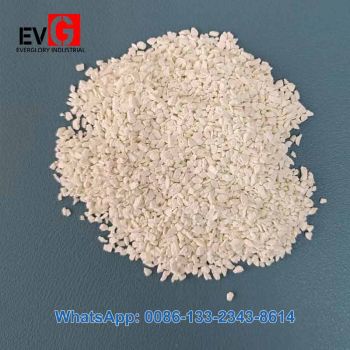
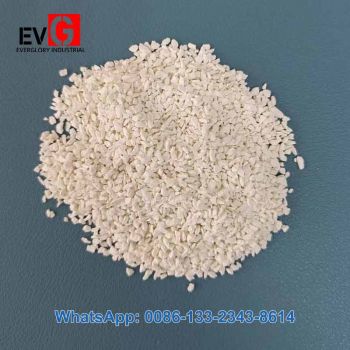
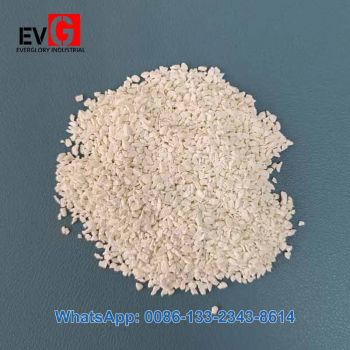
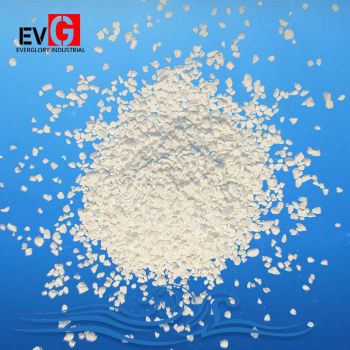
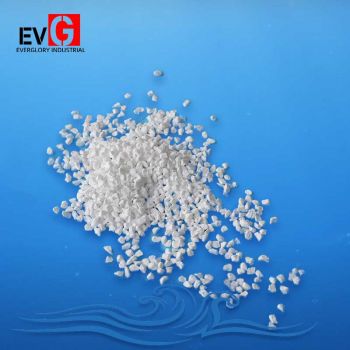
Dichlor — short for sodium dichloro-s-triazinetrione, printed on labels as sodium dichlor or sodium dichloroisocyanurate — is the stabilized chlorine that United States pool professionals build their maintenance programs around. Where unstabilized chlorine burns off in a single afternoon of sun, this stabilized solid carries cyanuric acid inside its own molecule, shielding the chlorine so it keeps disinfecting through long outdoor exposure. As a white crystalline solid, it dissolves fast, leaves water nearly neutral in pH, and stores for years without losing strength. Everglory Industrial manufactures and exports both commercial grades — 56% and 60% available chlorine — as granular and tablets, packed in UN 2465 certified plastic drums with full export documentation.
What Is Dichlor?
The name dichlor is the trade shorthand that developed in the North American pool industry for one specific compound: sodium dichloro-s-triazinetrione, the sodium salt of dichloroisocyanuric acid. Outside the United States the same substance is specified as sodium dichloroisocyanurate, abbreviated SDIC or NaDCC — the chemical name that international tenders and pharmacopoeias use. Two CAS identities exist: the anhydrous form (CAS 2893-78-9) at 60% minimum available chlorine, and the dihydrate form (CAS 51580-86-0) at 56%, which carries two molecules of crystal water. The chemistry is identical; only the concentration per kilogram differs.
When buyers ask what the compound actually does, the answer sits in the cyanuric ring. Dissolved in water, the compound releases hypochlorous acid — the true disinfecting agent of every chlorine source — while the cyanurate backbone stays in solution, loosely binding free chlorine and absorbing ultraviolet photons before they can destroy it. The result is a dichlor chlorine residual that survives hours of direct sunlight, the decisive advantage for outdoor pools, aquaculture ponds, and open treatment tanks in sun-belt markets.
Dichlor vs Trichlor — The Comparison That Matters
American pool chemistry is dominated by two stabilized chlorines: dichlor and trichlor (trichloro-s-triazinetrione, internationally called TCCA). They are sister compounds on the same cyanuric nucleus, but they behave differently enough that buyers choose between them deliberately:
The practical division of labor: trichlor delivers maximum chlorine per kilogram through slow-dissolving tablets for constant feeding, while the fast-dissolving counterpart handles shocking, superchlorination, and precise manual dosing without dragging the pH down. Because it dissolves quickly and completely, it also serves routine disinfection in drinking water programs and aquaculture, roles where acidic trichlor is rarely considered.
The Two Commercial Grades — Including Dichlor 56
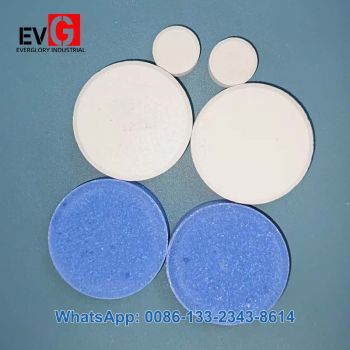
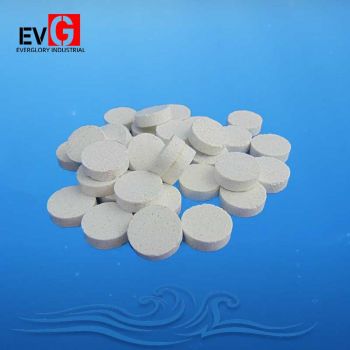
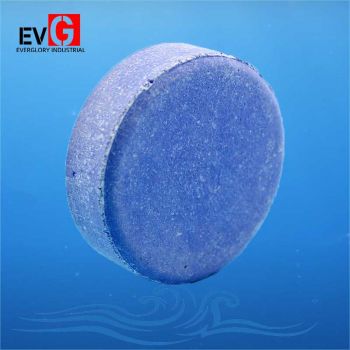
The grade most often requested under the trade name is dichlor 56 — the dihydrate, with 56% minimum available chlorine, which is the standard retail and distribution grade across the American pool market. The anhydrous 60% grade carries more chlorine per shipped kilogram and rewards long-haul container freight; the dihydrate offers the best storage stability and is the reference grade on many regional registrations. Both are available in granular form (8-30 mesh and 20-40 mesh) and as tablets (20 g and 3.3 g), so one supplier can cover an entire seasonal program.
Applications in Pools and Water Treatment
- Residential and commercial pools: weekly shocking, superchlorination, and vinyl-liner-safe dosing where near-neutral pH protects finishes
- Drinking water treatment: rural networks, well disinfection, and emergency response programs value the residual stability in hot climates
- Aquaculture: pond and hatchery disinfection between stocking cycles, with dechlorination before reintroducing stock
- Institutional hygiene: hospitals, schools, and food plants prepare surface disinfection solutions from fast-dissolving granular
Why Source from Everglory Industrial
- Direct factory pricing: Everglory manufactures and exports directly, quoting without trading-company margins and matched to live production capacity
- Both grades, both forms: 56% and 60%, granular and tablets, from one ISO 9001 quality system with batch-by-batch COA
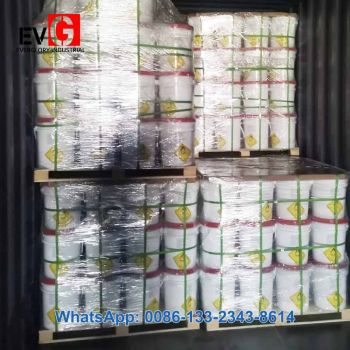
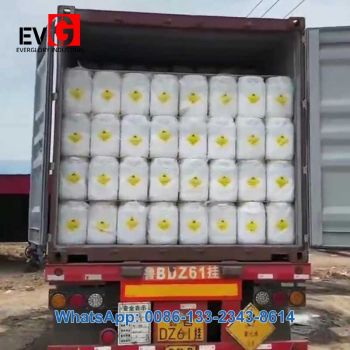
- UN-certified drum packaging: 5 kg through 50 kg UN 2465 plastic drums with inner liners, plus custom drum weights for private label programs
- Complete export documentation: MSDS, COA, Certificate of Origin, and dangerous goods declaration prepared for your destination market
Packaging and Storage
The product ships in UN 2465 certified plastic drums from 5 kg to 50 kg, with custom drum weights available on request. Store the product in its original sealed drum, cool, dry, and away from sunlight and heat; keep it strictly separate from acids, ammonia-containing products, and calcium hypochlorite, and reseal drums after every use. Properly stored, shelf life is 24 months from production.
Frequently Asked Questions
Q: What is dichlor?
Dichlor is the North American trade name for sodium dichloro-s-triazinetrione — chemically sodium dichloroisocyanurate (SDIC/NaDCC), a stabilized chlorine disinfectant. It is sold as an anhydrous grade at 60% available chlorine (CAS 2893-78-9) and a dihydrate grade at 56% (CAS 51580-86-0), in granular and tablet forms.
Q: Is dichlor the same as chlorine?
It is a chlorine-releasing compound rather than elemental chlorine. Dissolved, dichlor chlorine releases hypochlorous acid — the same disinfecting species as any chlorine source — but its cyanurate structure keeps that chlorine stable against sunlight and storage loss, where unstabilized chlorines decay quickly.
Q: What is the difference between dichlor and trichlor?
Both are stabilized chlorines on the cyanuric nucleus. Trichlor carries 90% chlorine and dissolves slowly, suiting constant tablet feeding but lowering pH. Dichlor dissolves fast at a near-neutral pH, suiting shocking and flexible dosing. Many pool programs run both in complementary roles.
Q: What does dichlor 56 mean?
It refers to the dihydrate grade with 56% minimum available chlorine (CAS 51580-86-0) — the standard distribution grade in the American pool market. The number describes the chlorine concentration, not a different chemical; the anhydrous counterpart carries 60%.
Q: Can sodium dichlor be used for drinking water?
Yes — sodium dichlor is a WHO-listed emergency disinfectant. Typical dosing of 3-5 mg/L targets a residual of 0.3-0.5 mg/L free chlorine after a minimum 30-minute contact time. Follow national drinking water regulations and verify residuals before distribution.
Q: What is the minimum order quantity and lead time?
The standard MOQ is 1 metric ton for trial orders; regular programs are best planned around a full 20ft container. Typical production lead time is 10-15 days after order confirmation, plus ocean transit. A firm schedule is confirmed in the proforma invoice for every order.
Ready to source stabilized chlorine direct from the manufacturer? Contact Everglory Industrial today for a free quotation with CIF pricing to your destination port. Send your required grade (56% or 60%), form (granular or tablets), mesh size, drum size, and monthly volume — our export team responds within 24 hours in English, French, and Spanish.