Products
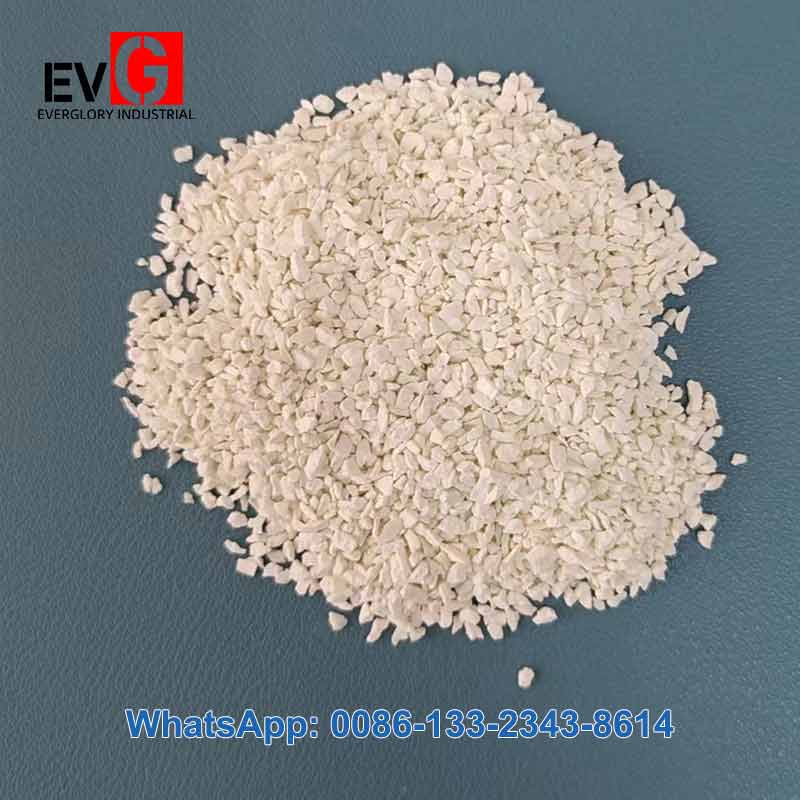
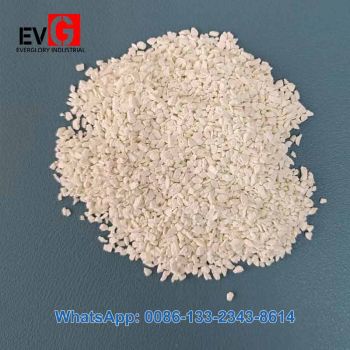
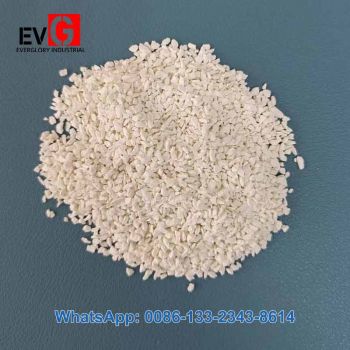
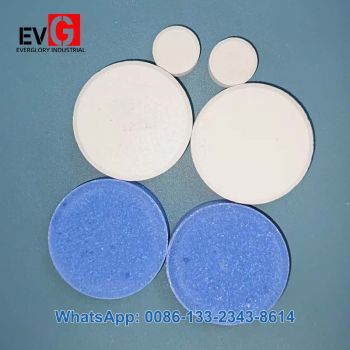
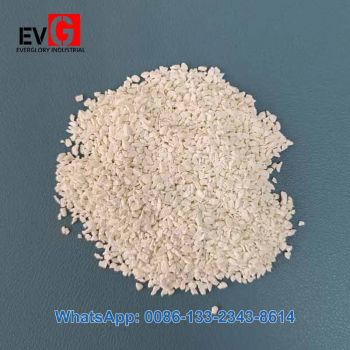
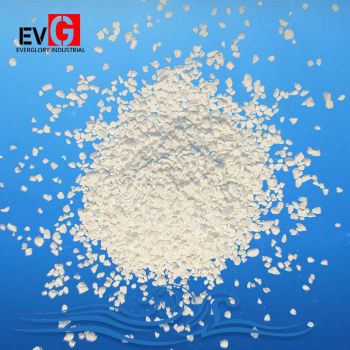
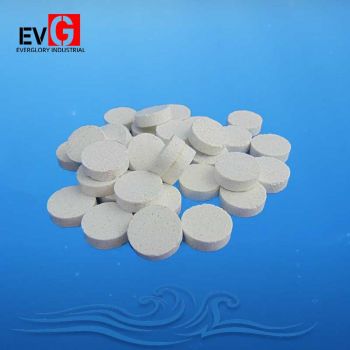
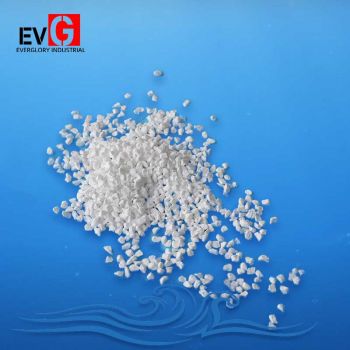
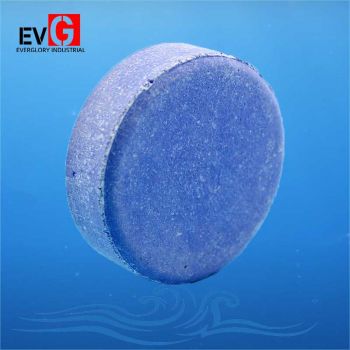
SDIC chemical — sodium dichloroisocyanurate, abbreviated NaDCC and frequently specified as SDIC chlorine — is the stabilized chlorine compound that utilities, pool operators, and procurement teams reach for when ordinary hypochlorite disappears too fast in sunlight or loses strength in storage. As a white crystalline solid built on the cyanuric acid ring, SDIC chemical stores its chlorine inside a molecular structure that shields it from ultraviolet degradation and releases it steadily once dissolved. The compound is supplied commercially in two grades — anhydrous at 60% minimum available chlorine and dihydrate at 56% — in granular form (8-30 mesh and 20-40 mesh) and as tablets (20 g and 3.3 g). Everglory Industrial manufactures and exports SDIC chemical to ISO 9001 standards, shipping in UN 2465 certified plastic drums with full export documentation for buyers worldwide.
What Is SDIC Chemical?
Sodium dichloroisocyanurate belongs to the family of chlorinated isocyanurates — disinfectant chemicals in which chlorine atoms are bonded to the cyanuric acid nucleus, with sodium balancing the molecule. Two commercial CAS identities exist: the anhydrous form (CAS 2893-78-9) and the dihydrate form (CAS 51580-86-0), which carries two molecules of water of crystallization per unit. Both deliver the same active chemistry; the difference is simply the chlorine concentration that follows from the crystal water.
What sets SDIC apart from unstabilized chlorines is the cyanurate ring itself. When the compound dissolves, it releases hypochlorous acid — the actual disinfecting agent — while the cyanuric acid backbone remains in solution as a stabilizer that bonds loosely with free chlorine and intercepts UV photons before they can destroy it. The result is a chlorine that keeps working through hours of direct sunlight, which is why stabilized chemistry dominates outdoor pool and open-tank treatment worldwide.
SDIC Chemical vs Other Chlorine Chemicals
Buyers evaluating the SDIC chemical usually weigh it against the three alternatives below. Each has a place; the comparison clarifies which chemistry fits which program:
The practical summary: SDIC occupies the balanced center of the chlorine family — enough strength for serious disinfection, near-neutral pH that spares equipment, fast dissolution for flexible dosing, and built-in sun protection. That combination is what makes it the default specification for outdoor pools, aquaculture, and drinking water programs across sun-belt markets.
Grades, Forms, and Specifications
Everglory Industrial supplies SDIC across both commercial grades and both physical forms. Every batch is tested before release and travels with a Certificate of Analysis:
Applications of SDIC Chemical
- Drinking water treatment: village networks, well disinfection, and emergency response programs rely on SDIC for residuals that survive long distribution runs and storage in hot climates
- Swimming pools and water parks: the stabilized chemistry holds free chlorine through full days of sunlight, while near-neutral pH protects heat exchangers and concrete surfaces
- Aquaculture: shrimp and fish operations dose ponds and hatcheries against pathogens, dechlorinating before stocking
- Institutional hygiene: hospitals, schools, and food plants prepare surface disinfection solutions from fast-dissolving granular
- Emergency and epidemic response: relief agencies stock the chemical for rapid-deployment water safety when infrastructure fails
Why Source SDIC Chemical from Everglory Industrial
- Direct manufacturer pricing: as the factory, Everglory quotes without trading-company margins, and every quotation is matched to current production capacity
- Both grades from one supplier: 60% anhydrous and 56% dihydrate, granular and tablets, let consolidation simplify your supply chain and paperwork
- ISO 9001 quality system: batch-by-batch COA, iodometric titration verification, and consistent mesh control protect incoming inspection at your end
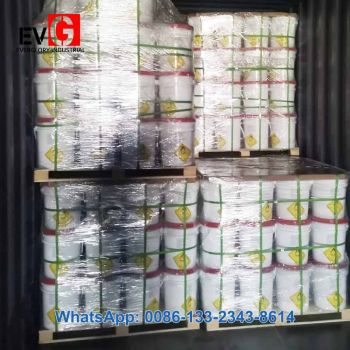
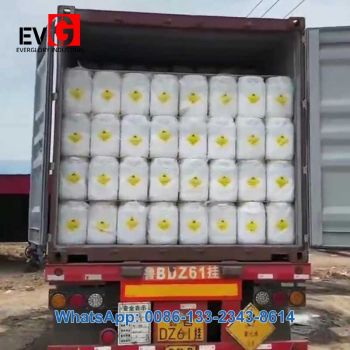
- UN-certified drum packaging: 5 kg through 50 kg UN 2465 plastic drums with inner liners, plus custom weights for private label programs
- Complete export documentation: MSDS, COA, Certificate of Origin, commercial invoice, packing list, and dangerous goods declaration prepared for your destination market
Packaging and Storage
The product ships in UN 2465 certified plastic drums from 5 kg to 50 kg, with custom drum weights available on request. Store SDIC chemical in its original sealed drum, cool, dry, and away from sunlight and heat; keep it strictly separate from acids, ammonia-containing products, and calcium hypochlorite, and reseal drums after every use. Properly stored, shelf life is 24 months from production.
Frequently Asked Questions
Q: What is SDIC chemical?
SDIC chemical is sodium dichloroisocyanurate (NaDCC) — a stabilized chlorine disinfectant built on the cyanuric acid ring. It is sold as an anhydrous grade at 60% minimum available chlorine (CAS 2893-78-9) and a dihydrate grade at 56% (CAS 51580-86-0), in granular and tablet forms. The built-in stabilizer protects its chlorine from UV loss, making it a standard choice for outdoor water treatment.
Q: Is SDIC chemical the same as chlorine?
It is a chlorine-releasing compound rather than elemental chlorine. Dissolved in water, the SDIC chemical releases hypochlorous acid — the same disinfecting species produced by any chlorine source — but its cyanurate structure keeps that chlorine stable in storage and sunlight, where unstabilized chlorines decay quickly.
Q: Which grade should I buy — 56% or 60%?
The 60% anhydrous grade carries more chlorine per shipped kilogram and suits long-haul container freight; the 56% dihydrate is the reference grade on many regional tenders and registrations and offers the best storage stability. Our sales team compares both against your destination, volume, and registration requirements before you commit.
Q: Can SDIC chemical be used in drinking water?
Yes. Typical dosing of 3-5 mg/L targets a residual of 0.3-0.5 mg/L free chlorine after a minimum 30-minute contact time. Follow your national drinking water regulations and verify residuals with a test kit before distribution.
Q: What is the minimum order quantity and lead time?
The standard MOQ is 1 metric ton for trial orders; regular programs are best planned around a full 20ft container. Typical production lead time is 10-15 days after order confirmation, plus ocean transit. A firm schedule is confirmed in the proforma invoice for every order.
Q: Do you support OEM private label for SDIC chemical?
Yes. We print your company name, logo, and contact details on drum labels, with custom drum weights available for private label programs. Label artwork templates are shared for your approval before production begins.
Ready to source SDIC chemical direct from the manufacturer? Contact Everglory Industrial today for a free quotation with CIF pricing to your destination port. Send your required grade (56% or 60%), form (granular or tablets), mesh size, drum size, and monthly volume — our export team responds within 24 hours in English, French, and Spanish.