Products
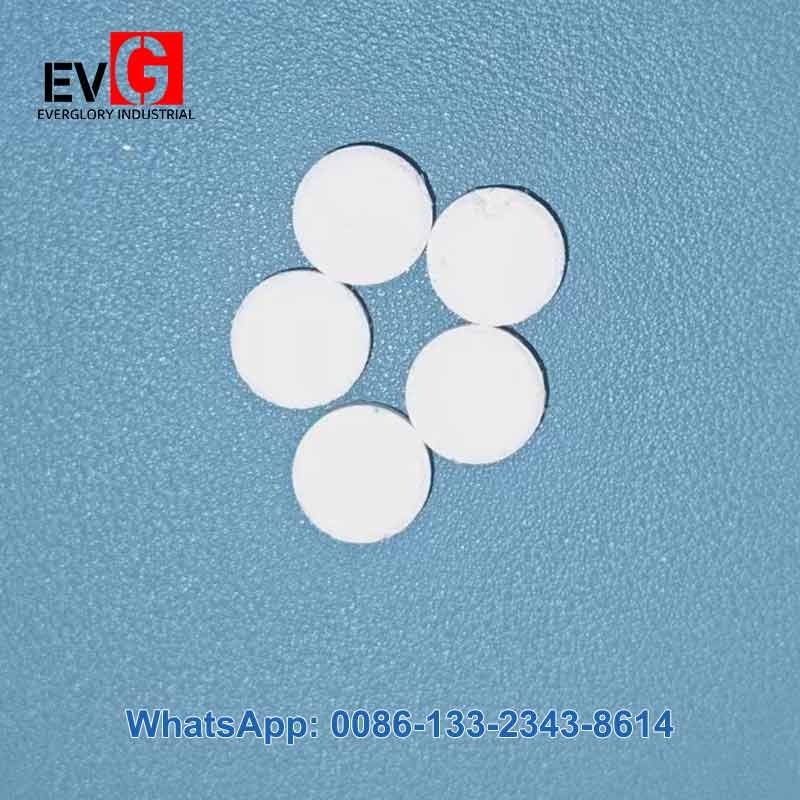
Slow Dissolving Chlorine Tablets — Sustained-Release Sanitization
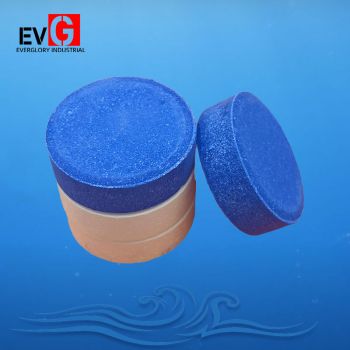
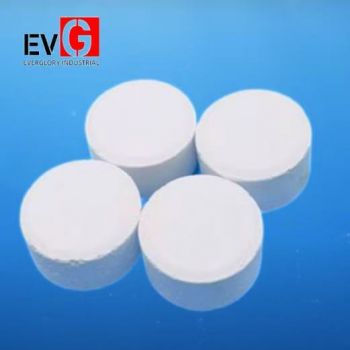
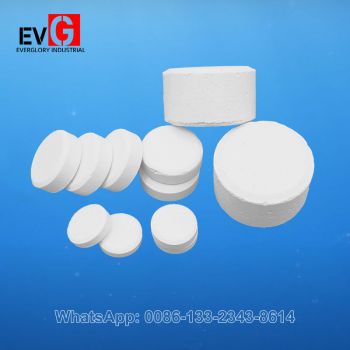
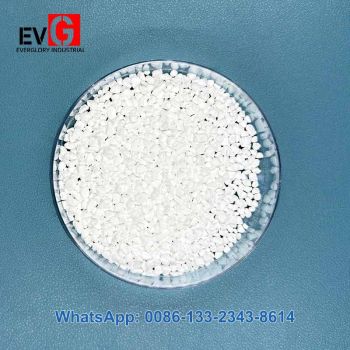
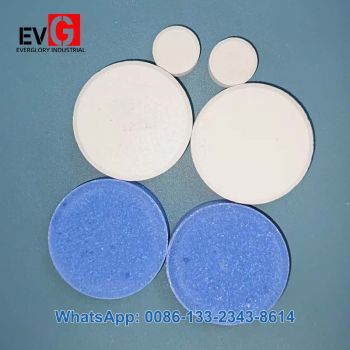
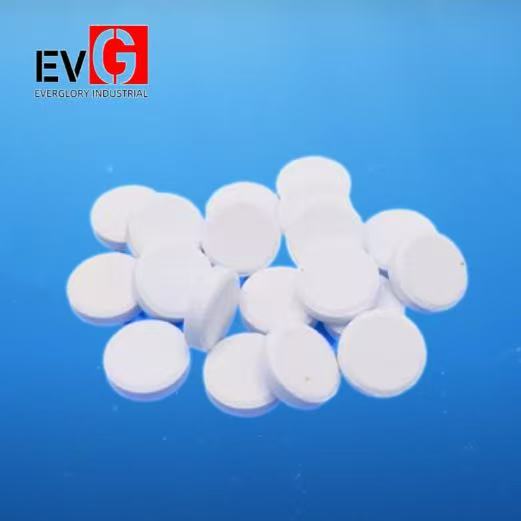
Slow dissolving chlorine tablets are engineered solid sanitizers that release chlorine gradually into water over days rather than minutes, maintaining a steady disinfectant residual from a single dose. Available from Everglory Industrial in both calcium hypochlorite (65-70% available chlorine) and trichlor TCCA (90% available chlorine) chemistries, these tablets solve the central problem of water treatment maintenance: the gap between chlorine demand, which is continuous, and manual dosing, which is periodic. By metering chlorine into the water at a controlled rate, slow dissolving chlorine tablets keep residuals within the target range between service visits, cut chemical waste from over-dosing, and free operators from daily handling. We export these tablets in 3-inch (200g) and 1-inch (20g) formats to distributors and water treatment contractors in more than 60 countries.
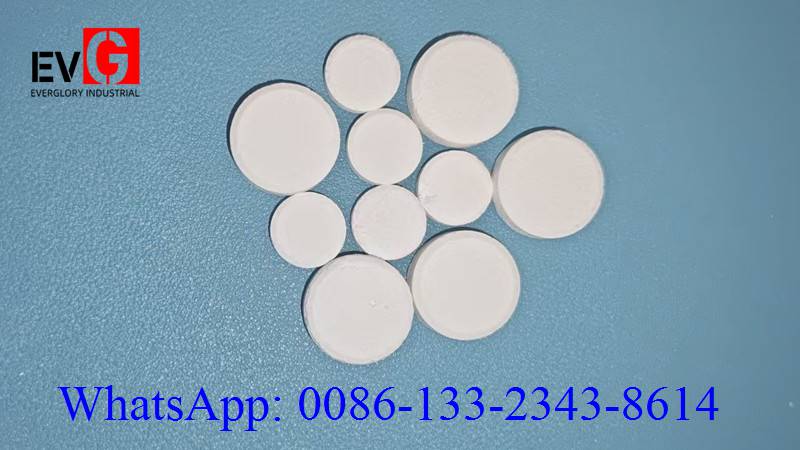
How Slow Dissolving Chlorine Tablets Work
The slow-release behavior of a chlorine tablet is not an accidental property — it is designed into the product through compaction control. During manufacture, chlorine granules are fed into a tablet press and compressed under precisely calibrated force. Higher compaction pressure increases tablet density and hardness, reducing the porosity into which water can penetrate. The result is a dense, uniform solid whose dissolution is limited by how quickly water can attack its outer surface, a process known as erosion-based dissolution.
As moving water flows across the tablet, only the exposed outer layer dissolves at any moment. The dissolved layer carries chlorine into circulation while the intact core remains protected inside. Because erosion proceeds from the surface inward, the release rate stays nearly constant as long as the tablet surface area and water conditions remain stable. Uniform density is essential to this behavior: density variations or internal cracks would create channels for water intrusion, causing uneven dissolution and unpredictable chlorine spikes. Every batch of slow dissolving chlorine tablets produced by Everglory Industrial is tested for hardness, friability, and dissolution profile to guarantee predictable release.
Four field variables govern the actual dissolution rate once the tablet is in service. Water temperature is the dominant factor — reaction and diffusion rates roughly double with each 10 degree C rise, so tablets erode noticeably faster in summer water. Flow rate across the tablet surface matters next: vigorous circulation removes dissolved chlorine quickly and exposes fresh surface, accelerating erosion, while still water slows it. Surface area follows: a 3-inch tablet dissolves far more slowly than the same chemistry pressed into 1-inch form, because erosion is proportional to exposed area. Finally, water pH influences the equilibrium between hypochlorous acid and hypochlorite ion, subtly affecting how quickly chlorine leaves the tablet surface.
Dissolution Rate Comparison
Everglory Industrial produces four tablet formats spanning two chemistries and two dissolution profiles. Typical erosion behavior in a pool skimmer or feeder at 25-28 degree C water temperature:
Benefits of Slow Dissolving Chlorine Tablets
- Consistent chlorine residual: Erosion-based release meters chlorine continuously, holding free chlorine within the target band instead of the spike-and-decay cycle produced by manual granular dosing
- Reduced labor and maintenance: A single 200g tablet can serve a pool for up to a week — service contractors visit less often, and facility staff avoid daily chemical handling entirely
- Lower chemical waste: Controlled dosing matches chlorine addition to actual demand, eliminating the over-dosing habit that wastes product and drives up operating cost
- Stabilized release pattern: Uniform tablet density produces a predictable, near-linear release curve, so operators can calculate dosing schedules with confidence rather than reacting to erratic residuals
- Compatible with automatic feeders: Standard 3-inch tablet dimensions suit inline and offline erosion chlorinators, enabling fully automated disinfection for commercial facilities
- Ideal for unattended facilities: Seasonal properties, remote pumping stations, and community systems without daily staffing maintain sanitized water between scheduled inspections
Slow Dissolving Chlorine Tablet Specifications
Both chemistries are available in 3-inch (200g) and 1-inch (20g) tablet formats. Key technical parameters compared:
Applications
- Residential pools with skimmers: Homeowners drop 3-inch slow dissolving chlorine tablets into the skimmer basket for week-long sanitization with no daily routine — the highest-volume application segment worldwide
- Commercial pools with erosion feeders: Hotels, swim schools, and public facilities feed 3-inch tablets through inline erosion chlorinators, achieving automated residual control that satisfies health-code monitoring requirements
- Cooling tower make-up water: Tablet erosion systems dose make-up and recirculating water to suppress Legionella and biofilm in HVAC cooling circuits, replacing labor-intensive liquid dosing at remote rooftoop installations
- Rural community water systems: Small villages and decentralized networks without power or dosing pumps use tablet erosion tanks to deliver continuous residual chlorination for safe drinking water
- Decorative fountains: Municipal plazas and commercial landscapes rely on slow-release tablets to keep ornamental water clear and odor-free between scheduled maintenance visits
Choosing the Right Slow Dissolving Tablet
Selecting the correct tablet requires answering four questions about the application before ordering:
- Question 1 — Is the water exposed to sunlight? Outdoor pools and open tanks lose unstabilized chlorine rapidly to UV. Choose trichlor tablets with built-in cyanuric acid protection. Indoor or covered water should use calcium hypochlorite tablets to avoid needless stabilizer accumulation.
- Question 2 — Is rising calcium hardness a concern? Continued cal hypo dosing raises hardness, which matters for plaster pools and scale-sensitive equipment. Where hardness must stay low, trichlor is the calcium-free choice.
- Question 3 — How long must one dose last? For weekly service intervals, the 3-inch (200g) format is standard. Where attention is possible every day or two, or where volumes are small, the 1-inch (20g) format gives finer dose control.
- Question 4 — What equipment will dose the tablet? Inline erosion feeders are designed around 3-inch tablets; floating dispensers accept both sizes. Confirm feeder manufacturer specifications before committing to a tablet size, and never mix chemistries inside the same feeder.
Packaging and Storage
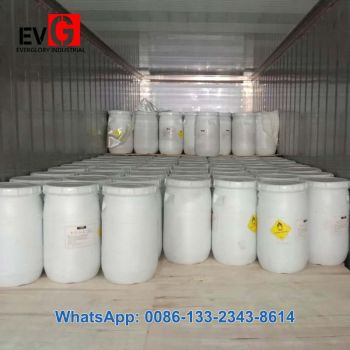
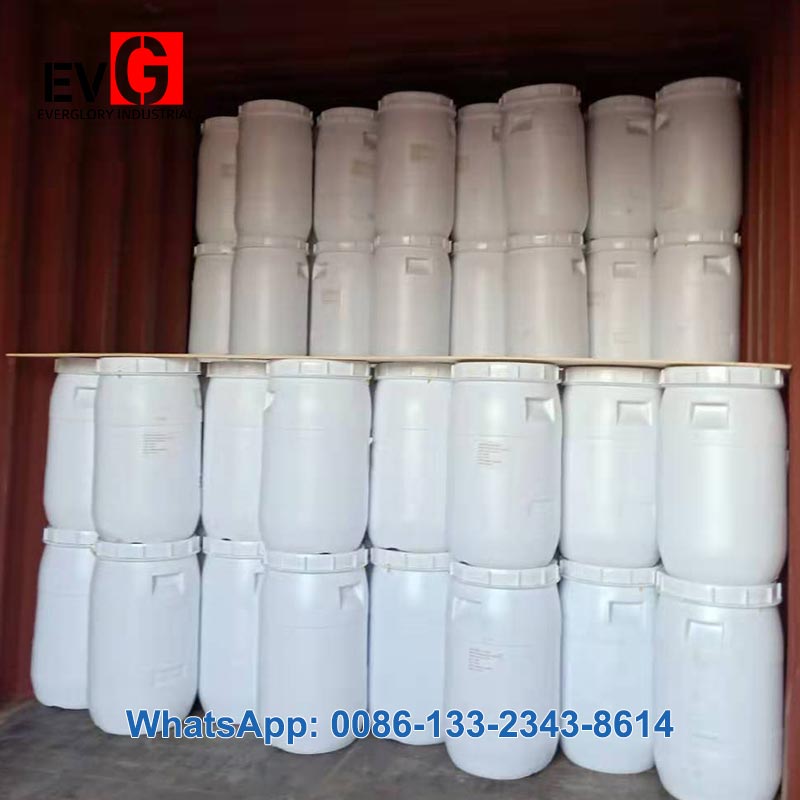
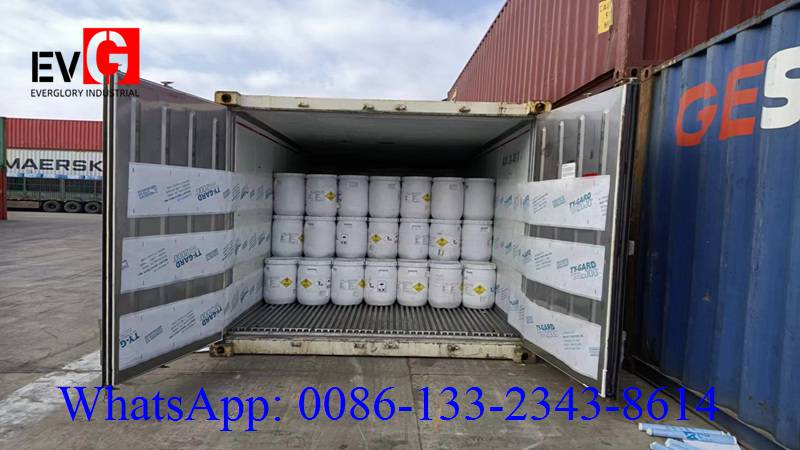
All slow dissolving chlorine tablets are UN 2880 Class 5.1 oxidizers and ship exclusively in UN-certified plastic drums with inner PE liners, fully compliant with IMDG maritime regulations. Standard export drum sizes:
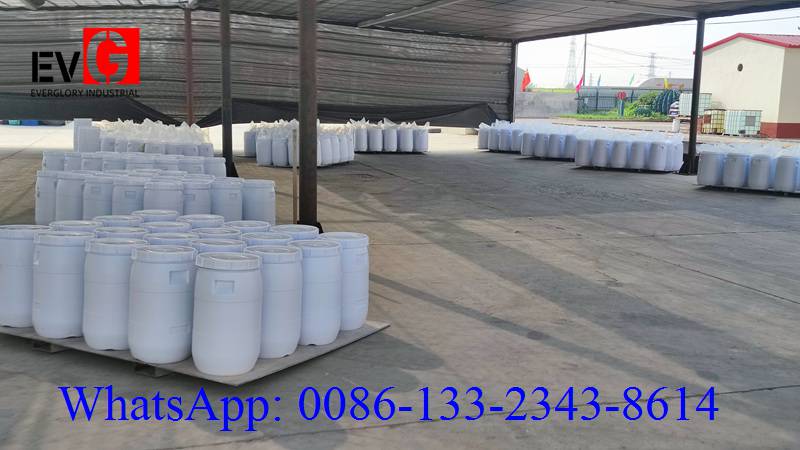
Store slow dissolving chlorine tablets in the original sealed drum in a cool, dry, well-ventilated space away from sunlight, heat, acids, and organic material. Keep calcium hypochlorite and trichlor products in separate storage areas — the two chemistries must never mix. Reseal drums tightly after opening to protect tablets from moisture, which accelerates degradation and destabilizes the compaction that controls dissolution. Shelf life is 24 months from production under proper storage conditions.
Frequently Asked Questions
Q: How long does a 3-inch slow dissolving chlorine tablet last?
A 3-inch (200g) calcium hypochlorite tablet lasts 2 to 7 days in a skimmer or feeder; a trichlor 3-inch tablet of the same weight lasts 5 to 7 days. Actual life depends on water temperature, circulation flow, and dispenser settings. At typical pool conditions of 25-28 degree C, plan on replacing a cal hypo tablet roughly twice a week and a trichlor tablet weekly.
Q: How does water temperature affect dissolution time?
Dissolution is a chemical and diffusion process, so it accelerates as temperature rises. As a working rule, tablets dissolve roughly twice as fast for every 10 degree C increase. In cold spring water a tablet may last far longer than rated, while in a hot spa the same tablet can erode in a fraction of the time — one reason 1-inch tablets are preferred for heated small volumes.
Q: Can slow dissolving chlorine tablets be used in a saltwater pool?
Yes, as a supplement. Saltwater systems generate chlorine via electrolysis, but output can fall short during heavy bather loads or equipment downtime. Trichlor tablets provide convenient backup dosing; note that continued use will add cyanuric acid, which should be monitored in salt pools just as in traditionally chlorinated water.
Q: How can I speed up or slow down tablet dissolution?
To slow dissolution, reduce water flow over the tablet — close dispenser vents partially, or reposition the dispenser away from return jets. To speed it up, increase flow and exposure: open dispenser vents fully, place tablets in the skimmer where circulation is strongest, or switch from 3-inch to 1-inch tablets for more surface area per gram. Never crush tablets to accelerate release; fragments dissolve unpredictably and can create localized over-concentration.
Q: Are these tablets compatible with automatic chlorine feeders?
Yes. Our 3-inch (200g) slow dissolving chlorine tablets are manufactured to standard dimensions for inline and offline erosion feeders from all major equipment brands. Use only one chemistry per feeder, confirm the feeder label approves the chemistry (some feeders are rated for trichlor only), and never introduce granular product or mixed chemistries into a tablet feeder.
Q: What is the minimum order quantity for slow dissolving chlorine tablets?
Standard MOQ is 1 metric ton for trial orders, covering either chemistry and either tablet size. Regular B2B orders ship most economically as full 20ft container loads. OEM private label production requires a minimum of 5 tons. Contact our export team with your specifications for a detailed quotation.
Ready to reduce maintenance with sustained-release sanitization? Contact Everglory Industrial today for a quotation on slow dissolving chlorine tablets — calcium hypochlorite or trichlor, 3-inch or 1-inch — with CIF pricing to your port. Our team responds within 24 hours in English, French, or Spanish. Send your chemistry, tablet size, drum preference, and order volume to get started.